In This Guide
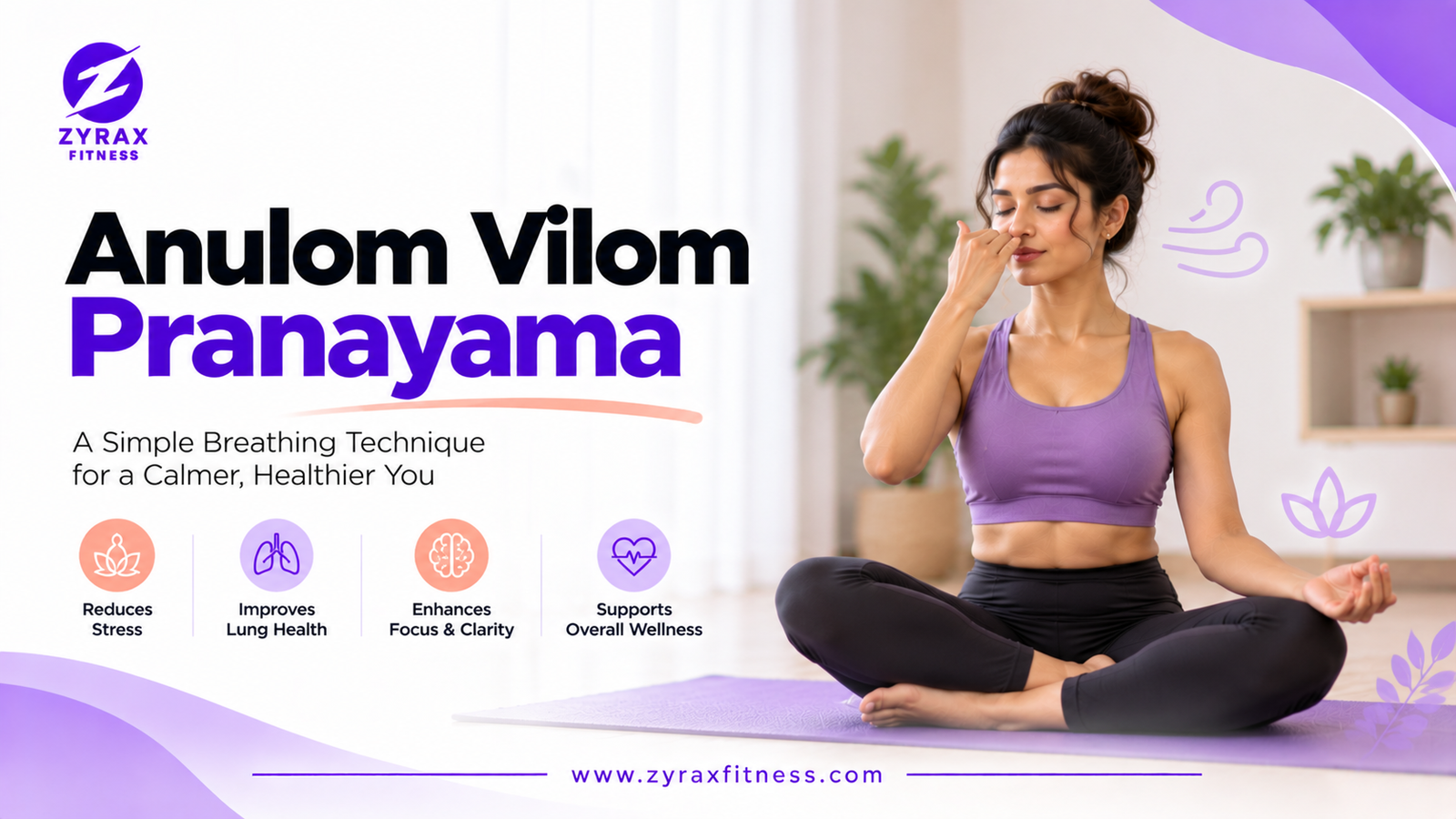
Anulom Vilom is a yoga breathing practice where you breathe in through one nostril and out through the other, switching sides each time. Beginners can start with 3–5 minutes a day, sitting comfortably and breathing slowly without holding the breath. Research suggests it may support calm and heart and lung function, but it is not a cure.
Many of us first saw Anulom Vilom on morning TV or in a park yoga group. It looks simple, and it is, but a few details make the difference between a relaxing practice and a dizzy one.
Anulom Vilom is also called alternate nostril breathing. You use your fingers to close one nostril at a time and guide the breath from side to side.
Some traditions use "Nadi Shodhana" for the same practice, and others use it for a version that adds breath-holding. Names vary between schools, so focus on the method.
| Step | What to Do |
|---|---|
| 1. Sit comfortably | Cross-legged on the floor or upright on a chair, spine straight, shoulders relaxed. |
| 2. Set your right hand | Fold your index and middle fingers towards your palm. You will use your thumb for the right nostril and your ring finger for the left. |
| 3. Breathe out fully | Empty your lungs gently before you begin. |
| 4. In through the left | Close your right nostril with your thumb. Breathe in slowly through the left nostril. |
| 5. Out through the right | Close your left nostril with your ring finger, release your thumb, and breathe out through the right. |
| 6. In through the right | Breathe in through the right nostril. |
| 7. Out through the left | Close the right, release the left, and breathe out through the left. |
That is one round. Continue for a few minutes, then rest your hand and breathe normally for a few breaths before getting up.
| Stage | Time per Day | Breath Pattern |
|---|---|---|
| Week 1–2 | 3–5 minutes | Equal breaths, e.g. in for 4, out for 4 |
| Week 3–4 | 5–10 minutes | Slightly longer out-breath, e.g. in for 4, out for 6 |
| Ongoing | 10–15 minutes | Comfortable, slow and quiet |
If you count, choose numbers that feel easy. The breath should never feel forced. Leave breath-holding out unless a trained teacher guides you.
A 2017 systematic review in the International Journal of Research in Medical Sciences looked at 44 randomised controlled trials of alternate nostril breathing. It reported positive effects on the autonomic nervous system and heart and lung measures, and improved thinking skills with regular practice (Ghiya, 2017).
The same review has important limits:
In practical terms, Anulom Vilom is a good tool for slowing down and feeling calmer. Claims that it cures diabetes, asthma or "all diseases" are not supported.
Not directly. Slow breathing burns very few calories. It may help indirectly if it reduces stress eating or improves sleep, but it does not replace exercise. For a yoga practice that does get your heart working, see Surya Namaskar for weight loss.
Wait 2–3 hours after a heavy meal.
| Mistake | Fix |
|---|---|
| Breathing fast or loudly | Slow down; the breath should be almost silent |
| Pressing the nose hard | Use a light touch, just enough to close the nostril |
| Slouching | Sit tall; use a wall or chair for support |
| Holding the breath as a beginner | Skip retention until a teacher guides you |
| Practising with a blocked nose | Wait until your cold clears |
Anulom Vilom is gentle, but check with your doctor first if you:
Stop if you feel dizzy, light-headed or breathless, and breathe normally. If you manage blood pressure, also read Zumba with high BP.
Anulom Vilom pranayama is a simple, free way to calm your mind and slow your breathing. Start with a few minutes, keep the breath easy and quiet, skip breath-holding as a beginner, and treat it as a support for your health, not a cure.
Want to learn pranayama with a teacher watching your technique? Join Zyrax Fitness's live online yoga classes, or try yoga and Zumba together with the ₹99 two-day trial.
Start with 3–5 minutes and build up to 10–15 minutes over a few weeks.
They are often used to mean the same alternate nostril breathing. Some schools use Nadi Shodhana for a version with breath-holding.
Yes. Slow alternate nostril breathing can help you relax before sleep.
Some studies suggest benefits for the heart and nervous system, but it is not a substitute for medicines. Keep taking prescribed treatment and talk to your doctor.
Yes. It is gentle and many women find it calming on period days.
Source: Ghiya S (2017), Alternate nostril breathing: a systematic review of clinical trials, International Journal of Research in Medical Sciences 5(8)
Key Takeaways
Ready To Begin?
Join Zyrax Fitness's live online Zumba and yoga classes and make your fitness journey fun again.
Start Your Journey