In This Guide
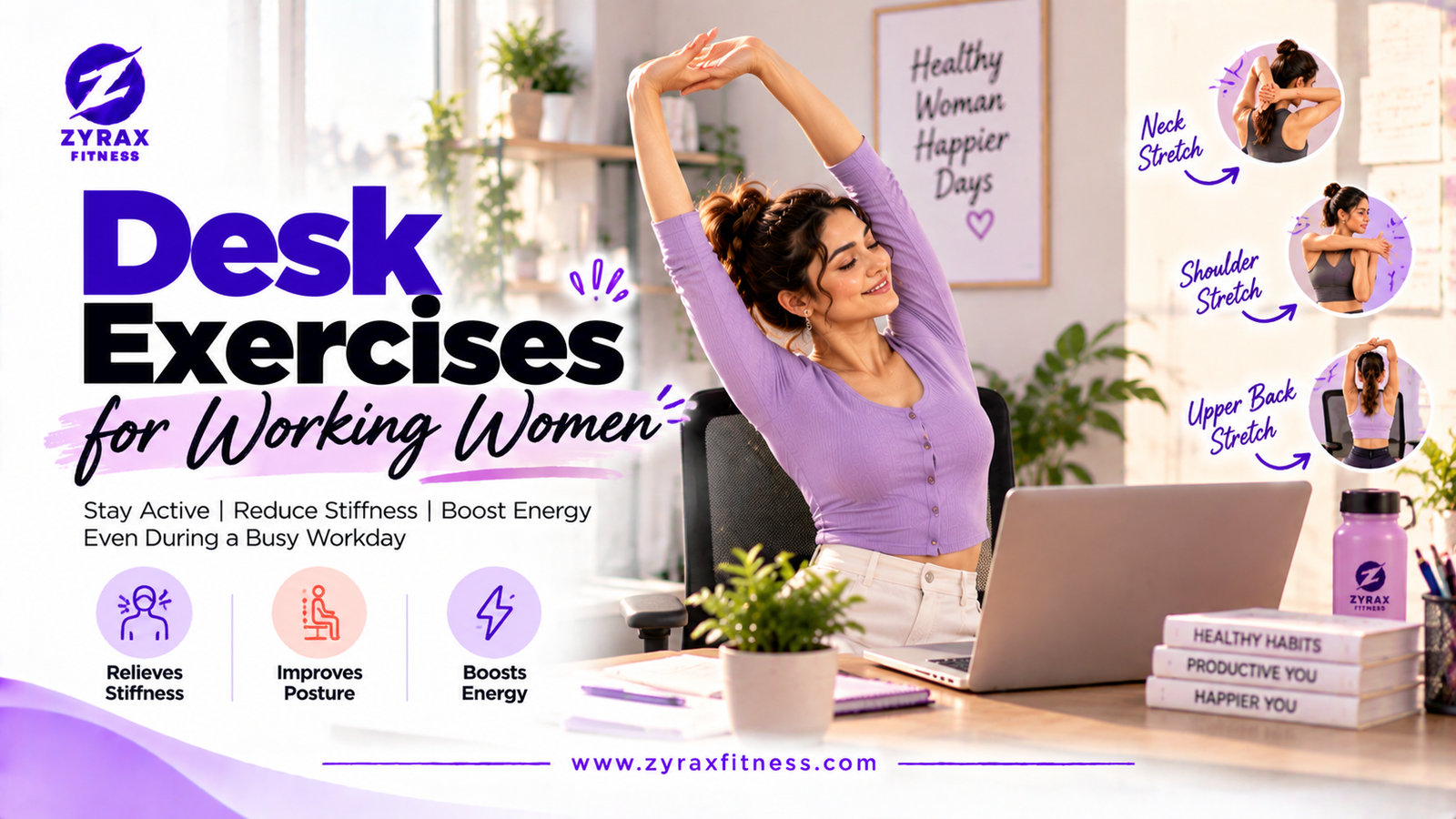
The best desk exercises for working women are simple moves you can do in office clothes: chair squats, desk push-ups, seated leg lifts, calf raises and gentle neck and back stretches. Together they make a 10-minute routine. Just as important is getting up for 2–3 minutes every 30 minutes. Short movement breaks help your body handle long sitting days better than one workout alone.
If you sit for 8–10 hours, at the office or working from home, you have probably felt it: a stiff neck by noon, a sore lower back by evening and low energy after lunch. You don't need a gym bag to fix part of this. You need a chair, a desk and a few minutes.
The WHO's 2020 guidelines advise adults to limit the time spent sitting and replace it with any physical activity, even light movement, in addition to regular exercise (WHO, 2020). A one-hour workout in the morning is great, but it doesn't fully cancel out ten hours of sitting.
Short breaks make a measurable difference. In a 2012 study in Diabetes Care, overweight adults who interrupted sitting with 2 minutes of light walking every 20 minutes had lower blood sugar and insulin after a meal than when they sat continuously (Dunstan et al., 2012).
Do this once in the late morning and once mid-afternoon. Move slowly and keep breathing.
| # | Exercise | How | Time / Reps |
|---|---|---|---|
| 1 | Chair squat | Stand up from your chair without using your hands, then sit back down slowly | 12 |
| 2 | Desk push-up | Hands on the desk edge, body straight, bend your elbows and push away | 10–12 |
| 3 | Seated leg lift | Sit tall, straighten one knee and hold for 3 seconds, lower | 10 per leg |
| 4 | Standing calf raise | Hold the desk, rise onto your toes, lower slowly | 15 |
| 5 | Seated torso twist | Sit tall, turn gently to one side holding the chair back, then the other | 5 per side |
| 6 | Shoulder rolls + chest opener | Roll shoulders back 10 times; clasp hands behind you and lift your chest | 1 min |
| 7 | Neck side stretch | Ear towards shoulder, hold; don't pull | 20 sec per side |
| 8 | Standing hip flexor stretch | Step one foot back, tuck your hips under, feel the stretch at the front of the hip | 30 sec per side |
| 9 | March on the spot | Lift knees, swing arms | 1 min |
Check your chair before squats: no wheels, or wheels locked against a wall.
If your neck and shoulders are the main problem, add the poses in our yoga for neck and shoulder pain guide.
Set a reminder every 30 minutes and pick one:
These small breaks add up to 30–40 minutes of extra movement in a working day.
Posture helps, but changing position often helps more. The best posture is the next one.
Desk exercises keep you moving, but they are not a full workout. Aim for the WHO target of 150–300 minutes of moderate activity a week plus strength work on two days. For working women, the easiest fits are:
Our guide on how to stay fit with just 30 minutes a day has a full weekly plan, and Zumba for busy women shows how short sessions add up.
See a doctor or physiotherapist if desk pain lasts more than a few weeks, wakes you at night, or comes with numbness, tingling or weakness in your arms or legs. Our guide to lower back pain in women explains common causes.
You can't always avoid long office days, but you can break them up. Do the 10-minute routine twice a day, take a 2-minute break every half hour, and protect a few real workouts each week.
Too busy for the gym? Our live online yoga classes and Zumba classes run in morning and evening slots around office hours. Start with the ₹99 two-day trial.
They burn a little extra energy and reduce sitting time, which helps overall health. For weight loss, combine them with regular workouts and a balanced diet.
Every 30 minutes is a practical goal. Research has used breaks as often as every 20 minutes.
Yes. Every move here works in office clothes. Skip the chair squat if your outfit restricts you, and do extra calf raises instead.
Chair squats, hip flexor stretches, calf raises and chest openers counter the most common sitting stiffness.
Not really. Long standing has its own problems. The goal is to change position often.
References: WHO guidelines on physical activity and sedentary behaviour (2020) · Dunstan DW et al. (2012), Breaking up prolonged sitting reduces postprandial glucose and insulin responses, Diabetes Care 35(5):976–83
Key Takeaways
Ready To Begin?
Join Zyrax Fitness's live online Zumba and yoga classes and make your fitness journey fun again.
Start Your Journey