In This Guide
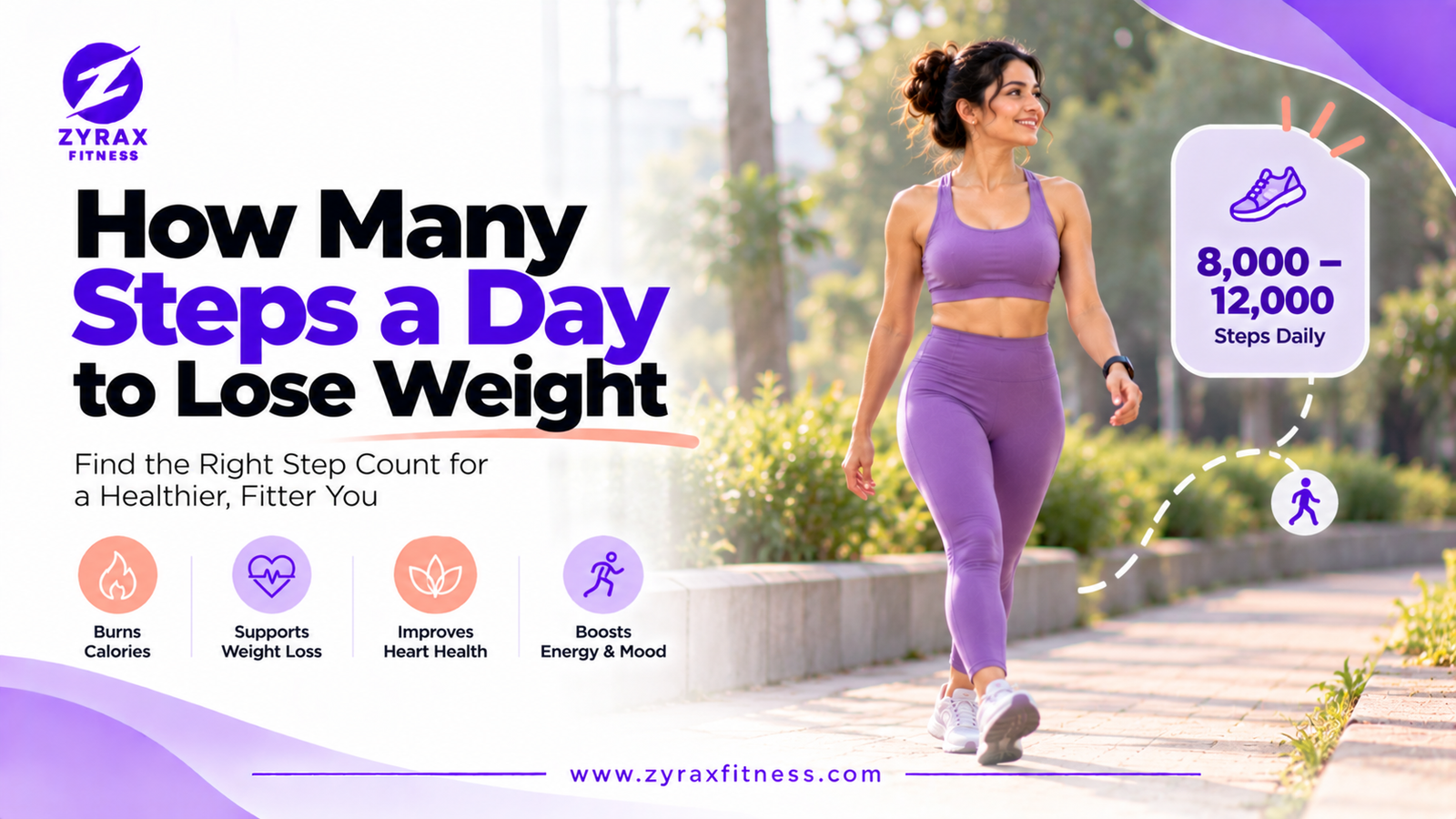
You don't need exactly 10,000 steps a day to lose weight. Research links about 8,000–10,000 steps a day for adults under 60, and 6,000–8,000 for those 60 and older, with major health benefits. For weight loss, steps help by adding calories burned, but you still need a calorie deficit. Start from your current count and add 2,000 steps.
Step counters have made "10,000 steps" a household goal. But where does it come from, and do you really need it? Here is what research says and how to use steps for weight loss.
It is a convenient round number rather than a figure that came out of research. It's still a useful target, but studies now give a more detailed picture.
A 2022 meta-analysis in Lancet Public Health (Paluch and colleagues) combined 15 studies covering 47,471 adults, 68% of them women. People who took more steps each day had a lower risk of death, but the benefit levelled off (Hospital Healthcare Europe summary):
| Age Group | Steps per Day Where Benefits Levelled Off |
|---|---|
| Under 60 | 8,000–10,000 |
| 60 and older | 6,000–8,000 |
For women, the most active quarter had a 57% lower risk of death than the least active quarter.
An important caveat: this study measured how long people lived, not weight loss. It tells you how many steps are good for your health; weight loss depends on your total calorie balance.
Walking burns calories, and a few thousand extra steps a day add up over weeks. Here is a rough estimate, assuming moderate walking (3.5 METs) at about 100 steps per minute:
| Body Weight | ~Calories per 1,000 Steps | ~Calories for 2,000 Extra Steps a Day |
|---|---|---|
| 55 kg | 34 | 68 |
| 65 kg | 40 | 80 |
| 75 kg | 46 | 92 |
These are estimates; brisk walking or uphill walking burns more. Two thousand extra steps a day won't cause weight loss on its own, but combined with sensible eating and other exercise it makes a real difference over months. Our guide to losing weight without feeling hungry covers the food side.
Short on time? See how to stay fit in 30 minutes a day.
Steps are great for daily movement, but adding structured workouts, including some strength training, helps you build muscle and lose fat more effectively. If you're choosing between walking and Zumba, see Zumba vs walking for weight loss. If the scale isn't moving, read why am I not losing weight even after Zumba.
You don't need to obsess over 10,000 steps a day to lose weight. Know your baseline, add 2,000 steps, build towards the target for your age, and pair walking with smart eating and regular workouts.
Want to pair your daily steps with workouts you'll enjoy? Join Zyrax Fitness's live online Zumba classes, starting with the ₹99 two-day trial.
No. It is a helpful target, but weight loss depends on your overall calorie balance. Many health benefits level off around 8,000–10,000 steps for adults under 60.
Walking helps, especially with a calorie deficit. Adding strength training and healthier eating usually gives better results.
At about 100 steps a minute, roughly 100 minutes spread across the day.
Yes. Every step counts, whether it's housework, walking in the corridor or pacing during calls.
Source: Paluch AE et al. (2022), Daily steps and all-cause mortality, Lancet Public Health — summary via Hospital Healthcare Europe
Key Takeaways
Ready To Begin?
Join Zyrax Fitness's live online Zumba and yoga classes and make your fitness journey fun again.
Start Your Journey