In This Guide
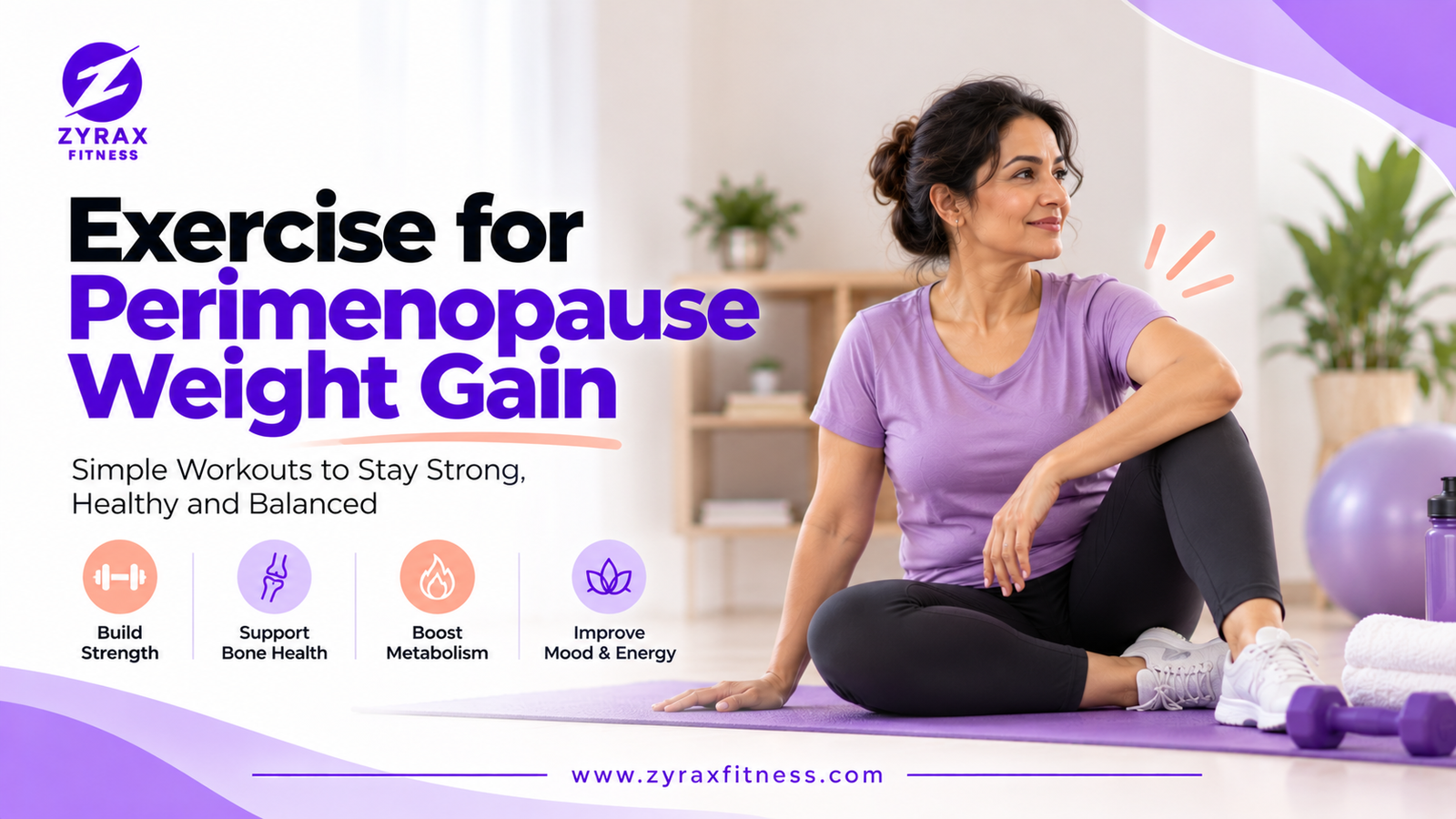
The best exercise for perimenopause weight gain combines strength training two to three times a week with about 150 minutes of moderate cardio, plus yoga or stretching for sleep and stress. Strength work protects the muscle you naturally lose with age, and cardio burns calories. Neither works without sensible eating.
If your weight has crept up in your 40s, especially around your belly, even though you eat the same, you're not imagining it. Here is why it happens and what kind of exercise actually helps.
Perimenopause is the transition before your periods stop, often lasting several years. Women gain about 1.5 pounds (around 0.7 kg) a year during the menopause transition on average, according to Hinge Health, citing the North American Menopause Society. Several things combine:
Hormones are not the whole story. The Mayo Clinic notes that hormonal changes alone don't cause menopause weight gain; it is usually linked to ageing, lifestyle and genetics too. That is good news, because lifestyle is the part you can change.
One caution: thyroid problems can cause similar weight gain and tiredness. If you have other symptoms, read about early thyroid signs and get tested.
If you do only cardio, you miss the biggest lever. Strength training rebuilds muscle, which keeps your metabolism higher and supports your bones.
Orthopaedic surgeon Dr Lysa Charles suggests starting with a weight you can lift about five times easily and increasing it once 10 repetitions feel easy (Powers Health). Hinge Health recommends two to three strength sessions a week targeting the major muscle groups.
A 20-minute home strength circuit (2–3 rounds, light dumbbells or water bottles):
| Exercise | Reps | Works |
|---|---|---|
| Squat to a chair | 10–12 | Legs, glutes |
| Wall or knee push-up | 8–10 | Chest, arms |
| Glute bridge | 12 | Glutes, lower back |
| Bent-over row | 10 each side | Upper back |
| Standing calf raise | 15 | Calves, balance |
| Dead bug | 8 each side | Deep core |
Protein helps muscle respond to this work. See how much protein an Indian woman needs.
Aim for about 150 minutes of moderate cardio a week, around 30 minutes on five days. Dance cardio such as Zumba counts, and many women find it easier to stick with than solo workouts. Brisk walking works too.
Short bursts of harder effort, such as faster songs in a Zumba class or uphill walking, can be added a couple of times a week as an extra, not a replacement. If your knees complain, switch to low-impact moves; our guide to Zumba with knee pain shows how.
Poor sleep makes weight harder to manage. A 2020 review found yoga was generally beneficial for sleep in women with insomnia and especially helpful for women going through menopause (Medical News Today). Yoga also helps balance and flexibility. Try our bedtime yoga routine for better sleep, or join our live online yoga classes.
| Day | Workout | Time |
|---|---|---|
| Monday | Zumba (moderate) | 30 min |
| Tuesday | Strength circuit | 20–25 min |
| Wednesday | Yoga + 15-min walk | 35 min |
| Thursday | Zumba with a few faster songs | 30 min |
| Friday | Strength circuit | 20–25 min |
| Saturday | Long brisk walk or Zumba | 40 min |
| Sunday | Rest or gentle stretching | — |
This gives roughly 150 minutes of cardio, two strength sessions and one yoga session. Start with half the time if you are new, and build up over four weeks.
Perimenopause weight gain is common, but it is not out of your control. Lift weights two or three times a week, get about 150 minutes of cardio you enjoy, add yoga for sleep and stress, and eat enough protein. Consistency matters more than intensity.
For age-specific guides, see home workouts for women over 40 and is Zumba good for women over 50.
Want a routine you'll stick with? Zyrax Fitness offers live online Zumba classes and online yoga for women. Start with the ₹99 two-day trial.
Yes, though it is often slower. A mix of strength training, cardio, enough protein and good sleep gives the best chance.
You need both. Strength training protects muscle and metabolism; cardio burns calories and supports heart health.
Yes, as part of a weekly plan. It counts towards your cardio and lifts mood, but add strength work on other days.
Many women feel more energetic within a few weeks. Body changes usually take a few months of consistent work.
Yes, if you have heart, bone or joint conditions, or symptoms that worry you. A doctor can also discuss hormone-related options.
Sources: Hinge Health — menopause weight gain · Mayo Clinic News Network · Powers Health, 21 Oct 2026 · Medical News Today — yoga and insomnia
Key Takeaways
Ready To Begin?
Join Zyrax Fitness's live online Zumba and yoga classes and make your fitness journey fun again.
Start Your Journey