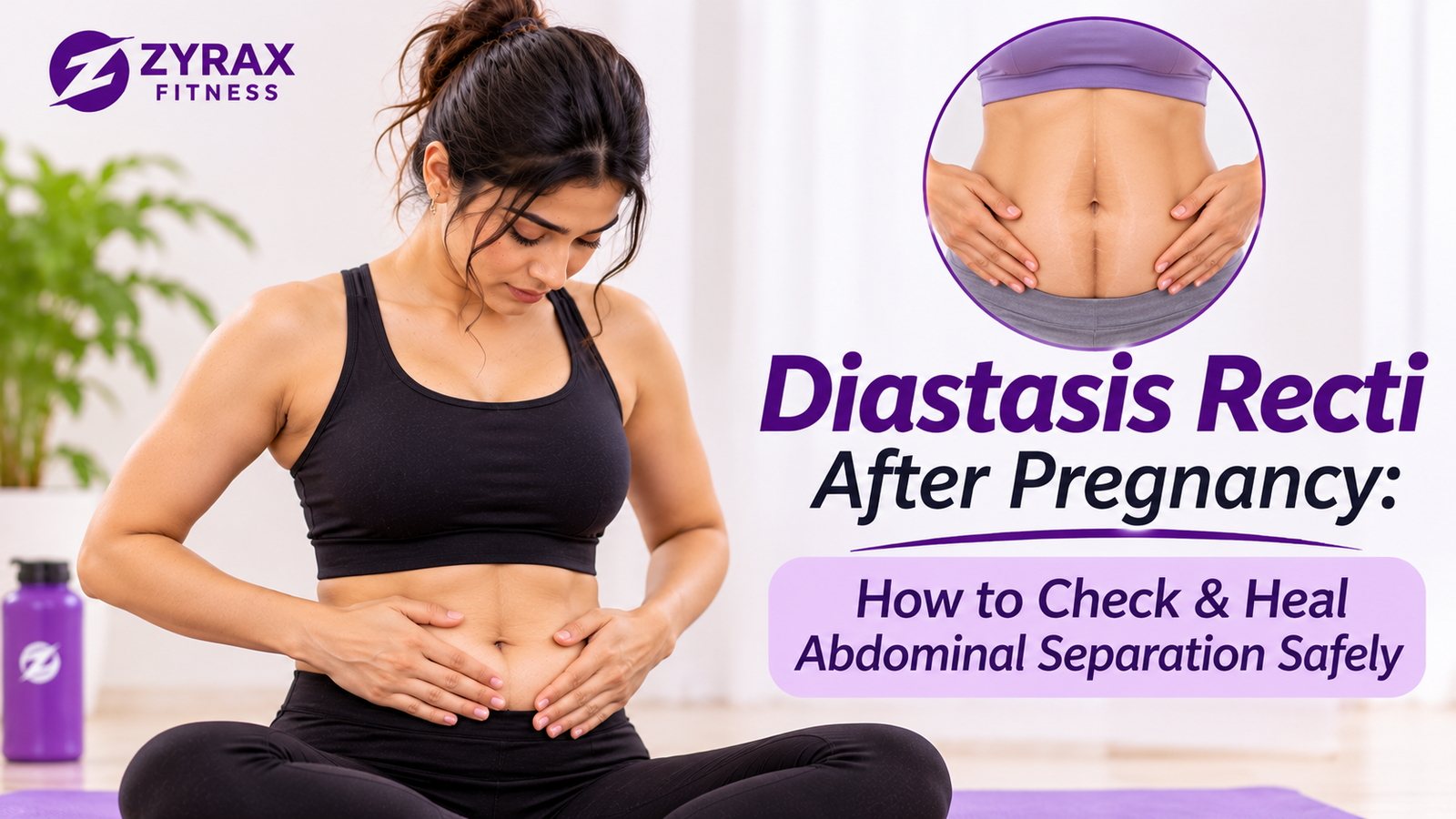
Diastasis recti abdominis (DRA) is the widening and thinning of the linea alba, the connective tissue running down the center of your abdominal wall between the left and right rectus abdominis ("six-pack") muscles.
It occurs naturally during pregnancy to accommodate a growing baby. Targeted deep-core breathing and transverse abdominis exercises help restore tension and midline stability postpartum, whether you delivered 6 weeks or 6 years ago.
Before starting any postpartum core work, get your doctor's clearance (usually at your 6-week check, and often later after a C-section). See a pelvic health physiotherapist if anything feels painful.
Why Abdominal Separation Happens (And Why Crunches Make It Worse)
During the second and third trimesters, pregnancy hormones (relaxin and estrogen) soften connective tissue while the expanding uterus stretches the abdominal wall forward.
After delivery, the linea alba needs controlled, gentle tension to remodel and thicken. When women jump straight into traditional ab exercises like crunches, sit-ups, V-ups, or full front planks, excessive intra-abdominal pressure pushes outward against the weakened midline, causing the belly to bulge or "cone" (doming) and widening the gap further.
A visible vertical ridge, dome, or cone shape along your midline when sitting up from bed or coughing
A persistent lower-belly pooch that protrudes more at the end of the day after eating
Lower back ache or pelvic instability when standing or carrying your baby
Difficulty engaging your core or feeling disconnected from your abdominal muscles
Step-by-Step: How to Self-Check for Diastasis Recti at Home
Perform this simple 60-second check once postpartum bleeding has stopped (typically 4 to 6 weeks after a vaginal delivery or 6 to 8 weeks after a C-section):
Lie on your back on a firm mat with knees bent and feet flat on the floor.
Place two fingers (index and middle finger) horizontally right above your belly button, pointing toward your toes.
Exhale gently and lift only your head and shoulders slightly off the floor (like a mini-crunch) while pressing your fingers gently into the midline.
Feel for the edges of the left and right abdominal muscles contracting around your fingers, and note:
Width: How many fingers fit in the gap? A gap of 2 fingers or more indicates diastasis recti.
Depth: Do your fingers sink deeply into soft tissue, or do you feel firm tension pushing back? Restoring firmness and tension matters even more than completely closing the gap.
Repeat the check 2 inches above the belly button and 2 inches below the belly button.
Exercises to Avoid vs. Safe Alternatives
Avoid Early Postpartum (Causes Coning)
Safe Core-Rebuilding Alternatives
Traditional crunches & sit-ups
360-degree diaphragmatic breathing
Full front planks & push-ups on toes
Wall planks or elevated incline planks
Double leg lowers & scissor kicks
Single-leg heel slides & toe taps
Russian twists & heavy bicycle crunches
Pallof presses (anti-rotation band hold)
Heavy overhead lifting while breath-holding
Exhale-on-effort glute bridges
Rebuilding your core after baby?Our live online yoga classes are led by a certified instructor who gives safe, gentle variations for new mothers, so you can work on breathing, posture and core strength from home.
The weeks below count from the day you start this programme, not from your delivery date. Move to the next phase only when the current one feels easy and your belly does not dome.
Goal: Reconnect the diaphragm, deep core (transverse abdominis), and pelvic floor.
360° piston breathing: Inhale through your nose, letting your ribs expand sideways and your pelvic floor relax. Exhale slowly through pursed lips as if blowing through a straw, gently lifting your pelvic floor and drawing your lower hip bones together. (3 sets × 8 breaths)
Supine heel slides: Lying on your back with a neutral spine, exhale to engage your deep core and slowly slide one heel straight out along the floor without letting your lower back arch or belly dome. Inhale to return. (3 sets × 8 reps per leg)
Glute bridges with exhale: Inhale at the bottom; exhale, engage your deep core, and press through your heels to lift your hips. (3 sets × 12 reps)
Pair this phase with Kegel exercises to rebuild your pelvic floor.
Phase 2: Controlled Core Stability (Weeks 4-7)
Goal: Build load tolerance without midline doming.
Dead bug (heel taps only): Lift your legs to tabletop (90° bend). Exhale to tap one heel lightly to the mat while keeping your lower ribs knitted down. (3 sets × 8 reps per side)
Bird-dog: On hands and knees, exhale and extend the opposite arm and leg slowly without shifting your hips. (3 sets × 8 reps per side)
Side-lying clam shells & modified side planks (on knees): Strengthen the obliques and lateral hip stability to support the linea alba. (3 sets × 10 reps / 20-second hold)
Yes. Connective tissue responds to mechanical loading at any age. Women who are 3, 5, or even 10+ years postpartum can significantly improve core tension, reduce back pain, and flatten abdominal doming through consistent transverse abdominis rehabilitation.
A supportive abdominal binder can provide temporary comfort and proprioceptive feedback during the first 2 to 4 weeks after delivery, especially after a C-section. However, passive wrapping cannot strengthen muscles; progressive core exercises are essential for lasting recovery.
Consult a women's health physiotherapist if your gap is wider than 3 to 4 fingers, if you notice painful bulging (possible umbilical hernia), or if you experience urinary leakage or pelvic heaviness during workouts.
Key Takeaways
Diastasis recti is a normal widening of the linea alba in pregnancy, and it can improve whether you delivered 6 weeks or 6 years ago.
Check at home with the 60-second finger test: a gap of 2 fingers or more, or a soft, sinking midline, signals separation.
Skip crunches, sit-ups and full planks early on; start with breathing, heel slides and bridges instead.
Progress through the 3 phases only when your belly stays flat, and see a physiotherapist for wide gaps, bulging or leakage.
Ready To Begin?
Put On Your Favorite Song and Start
Join Zyrax Fitness's live online Zumba and yoga classes and make your fitness journey fun again.