In This Guide
Starting strength training at home can feel confusing, especially when you are choosing your first pair of dumbbells. Should you start with 1 kg, 2 kg, 3 kg or 5 kg? Is a heavier dumbbell better for faster results? And how do you know whether the weight is right for your body?
If you are a woman beginning your fitness journey, choosing the correct dumbbell weight is an important first step. The right weight helps you build strength, improve muscle endurance and perform exercises with proper technique.
The good news is that you do not need expensive gym equipment or very heavy dumbbells to get started. With the right weight selection and a consistent routine, you can begin strength training comfortably at home.
In this guide, we will explain the best dumbbell weight for women beginners in kg, how to choose weights for different exercises and when you should increase the weight.
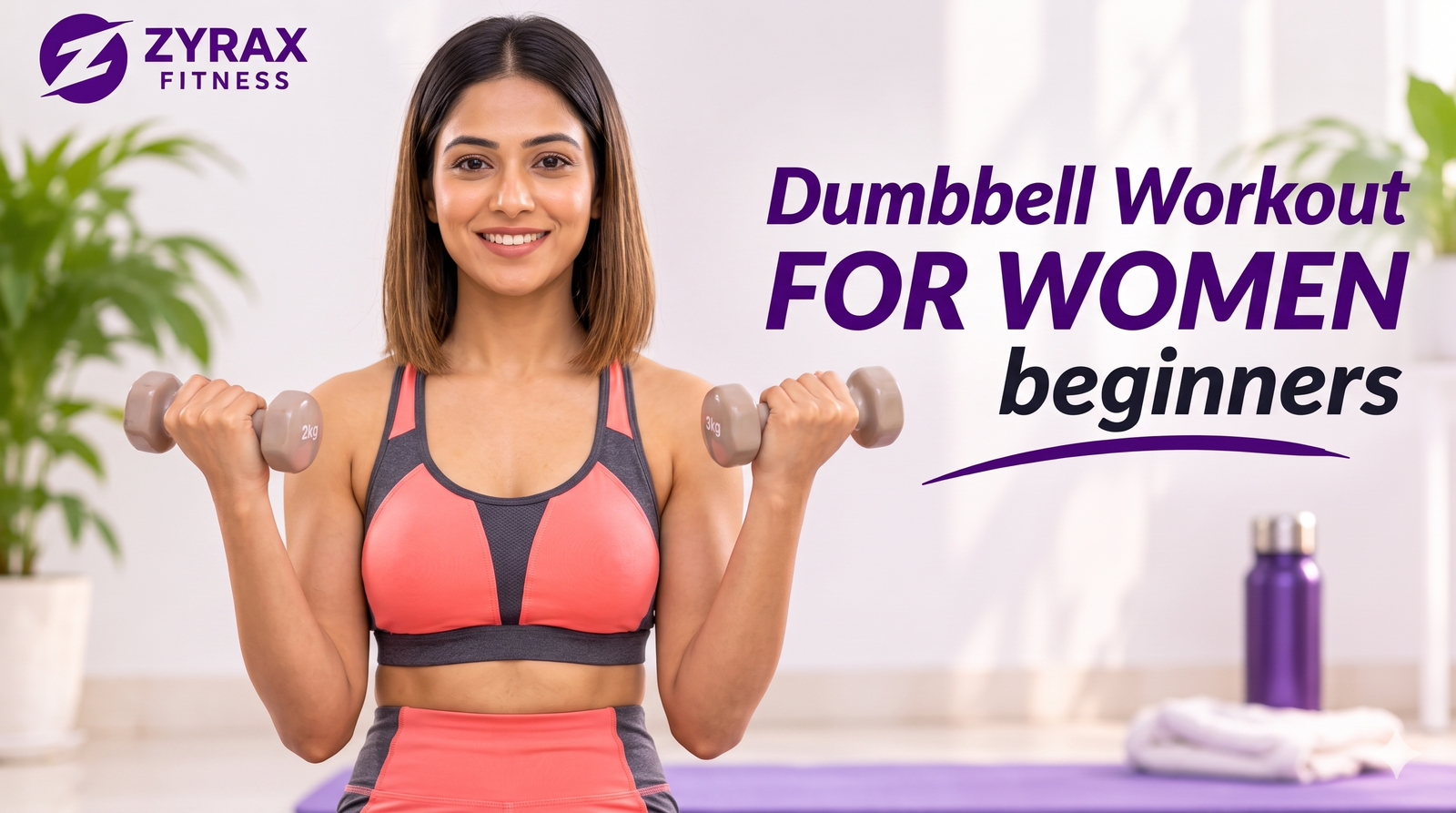
For most women who are new to strength training, starting with dumbbells between 1 kg and 3 kg for upper-body exercises and 2 kg to 5 kg for lower-body exercises can be a practical starting point.
However, the ideal weight depends on your current strength, fitness experience, exercise type and ability to maintain proper form. Here is a general starting guide:
| Fitness level | Suggested starting weight |
|---|---|
| Complete beginner | 1–2 kg |
| Beginner with some fitness experience | 2–3 kg |
| Comfortable with basic strength exercises | 3–5 kg |
| Experienced with resistance training | Individualised based on exercise |
These are starting suggestions, not strict limits. Some women may need lighter weights, while others may comfortably lift heavier weights.
Remember: the best dumbbell weight is one that challenges your muscles without affecting your exercise technique.
Different muscle groups have different strength levels. Your legs and glutes can generally handle more resistance than smaller upper-body muscles. This means you do not necessarily need to use the same dumbbell weight for every exercise.
Here is a beginner-friendly reference table:
| Exercise | Suggested starting weight |
|---|---|
| Bicep curls | 1–3 kg per hand |
| Shoulder press | 1–2 kg per hand |
| Lateral raises | 0.5–2 kg per hand |
| Dumbbell rows | 2–4 kg per hand |
| Goblet squats | 2–5 kg |
| Dumbbell lunges | 1–3 kg per hand |
| Romanian deadlifts | 2–5 kg per hand |
| Dumbbell chest press | 1–3 kg per hand |
These are approximate beginner ranges. Adjust them according to your strength and technique.
For example, you may find 2 kg comfortable for bicep curls but need 4 kg for goblet squats. There is nothing wrong with using different dumbbell weights for different exercises.
If you are unsure which dumbbell weight to purchase, follow this simple method.
Choose a weight that allows you to perform the exercise without swinging your body or using momentum. For example, if you have never performed bicep curls before, try 1 kg or 2 kg dumbbells.
Complete 8–12 controlled repetitions while maintaining proper posture and movement. Pay attention to how your muscles feel during the final few repetitions.
Your weight is probably appropriate if:
If 12 repetitions feel extremely easy, you may need slightly more resistance. If you cannot complete even 8 controlled repetitions, or your technique starts breaking down, reduce the weight.
The goal is to challenge your muscles, not force yourself to lift something too heavy.
Many beginners assume that lifting heavier weights means getting better results. However, using excessive weight can make it difficult to perform exercises correctly. Watch out for these signs:
1. Swinging your body: If you need momentum to complete bicep curls, your dumbbells may be too heavy.
2. Arching your back: Excessive back arching during shoulder presses or other movements can indicate poor technique or excessive resistance.
3. Shrugging your shoulders: If your shoulders keep moving towards your ears during exercises, reduce the weight and focus on control.
4. Losing control: If you cannot lower the dumbbells slowly, you may be using more weight than you can currently manage.
5. Experiencing sharp pain: Stop the exercise if you experience sharp pain, dizziness or unusual discomfort. Muscle effort is normal, but pain should not be ignored.
Using lighter weights with proper technique is much more useful than lifting heavier weights incorrectly.
Once you become comfortable with your current dumbbell weight, you may wonder when it is time to move to heavier dumbbells. You do not need to increase your weight every week.
Instead, follow the principle of progressive overload. This means gradually increasing the challenge placed on your muscles as your strength improves. Consider increasing your dumbbell weight when:
For example:
| Exercise | Starting weight | Next progression |
|---|---|---|
| Bicep curls | 2 kg | 2.5 kg |
| Shoulder press | 1 kg | 1.5–2 kg |
| Goblet squats | 3 kg | 4–5 kg |
| Dumbbell rows | 2 kg | 3 kg |
Increase resistance gradually, and remember that small improvements in repetitions, control and consistency also count as progress.
Want a trainer to check your form?Our live online strength training for women starts from beginner level, and a certified coach corrects your technique on camera as you train.
Book a Strength TrialYes! Women can begin building strength and improving muscle endurance with 2 kg dumbbells. However, whether 2 kg is enough depends on the exercise and your fitness level. For example:
As your muscles adapt, the same weight may become less challenging. This is when you can gradually increase resistance or adjust your repetitions. You do not need to lift extremely heavy weights to begin your strength-training journey.
Absolutely! Dumbbells are one of the most convenient pieces of equipment for home strength training. They allow you to work on different muscle groups without needing a complete gym setup. Some benefits include:
Improved muscle strength: Resistance exercises help strengthen your arms, shoulders, back, legs and glutes.
Better muscle endurance: Regular strength training helps your muscles perform everyday activities more comfortably.
Convenient home workouts: You can perform several exercises in a small space.
Progressive training: You can gradually increase your dumbbell weight as your strength improves.
Full-body workouts: A pair of dumbbells can be used for exercises targeting almost every major muscle group.
For women who want to start exercising at home, combining strength training with activities such as yoga, walking or Zumba can help create a balanced fitness routine.
If you have just purchased your first dumbbells, start with a simple full-body routine. Try these exercises two or three times per week, allowing recovery between strength-training sessions.
| Exercise | Sets | Repetitions |
|---|---|---|
| Dumbbell squats | 2 | 10–12 |
| Bicep curls | 2 | 10–12 |
| Dumbbell shoulder press | 2 | 8–10 |
| Dumbbell rows | 2 | 10–12 |
| Glute bridges | 2 | 12–15 |
| Dumbbell Romanian deadlifts | 2 | 10–12 |
Beginner workout tips:
If you are completely new to exercise, start with one set per exercise and increase gradually as you become comfortable.
If you are planning to purchase dumbbells for home workouts, you may come across two main options.
These come in individual weights, such as 1 kg, 2 kg, 3 kg and 5 kg.
Advantages: easy to use, convenient for quick workouts, and no weight adjustment required.
Disadvantages: you may need to purchase multiple pairs, and they require more storage space.
These allow you to change the resistance using removable weight plates or an adjustment mechanism.
Advantages: multiple weight options in one set, useful for progressive strength training, and they can save storage space.
Disadvantages: some models take time to adjust, and quality and locking mechanisms vary.
If you are just starting, a pair of comfortable fixed dumbbells can be sufficient. If you want to continue strength training and increase resistance over time, adjustable dumbbells may be a more flexible option.
Before starting your routine, make sure you avoid these common mistakes:
1. Choosing weights that are too heavy: Start with manageable resistance and build strength gradually.
2. Ignoring exercise technique: Correct form should always come before heavier weights.
3. Skipping warm-ups: Prepare your muscles and joints before exercising.
4. Training without recovery: Your muscles need time to recover and adapt.
5. Comparing your strength with others: Every woman's fitness journey is different.
6. Increasing weight too quickly: Progress gradually instead of rushing towards heavier dumbbells.
7. Ignoring nutrition: Adequate protein, balanced meals and sufficient calories support muscle recovery and development. Our guide to protein for Indian women can help.
Consistency is more important than lifting the heaviest dumbbells in the room.
Choosing the right dumbbell weight for women beginners does not have to be complicated. Start with manageable weights, learn proper exercise techniques and gradually increase resistance as your strength improves.
Whether you choose 1 kg, 2 kg, 3 kg or 5 kg dumbbells, remember that your progress depends on consistency, proper training, recovery and nutrition.
You do not need to be strong before starting strength training. You become stronger by starting and staying consistent.
Ready to begin your fitness journey? Explore Zyrax Fitness and discover guided online workouts, including strength training, Yoga and Zumba, designed to help women build healthier and more active lifestyles.
Most women can explore starting weights of 1–3 kg for upper-body exercises and 2–5 kg for lower-body exercises. The right weight depends on individual strength, exercise and technique.
Yes. Two-kilogram dumbbells can be useful for several beginner exercises, including bicep curls, shoulder exercises and some upper-body movements. You may eventually need heavier weights for stronger muscle groups.
A pair of 1–3 kg dumbbells can be a practical starting point for many upper-body exercises. If possible, having access to heavier resistance for lower-body exercises can provide more flexibility.
Not necessarily. Some beginners may comfortably use 5 kg for exercises such as goblet squats, while others may find it too heavy. Always choose weights according to your ability to maintain proper form.
Women can benefit from progressively challenging strength training. Lifting heavier weights is not compulsory, but gradually increasing resistance as strength improves can help build muscle and strength.
Dumbbell exercises can support weight management by helping build and maintain muscle. For overall weight loss, combine regular physical activity with a sustainable, balanced eating routine.
Yes. Different muscle groups and exercises require different resistance levels. Your legs may comfortably handle more weight than your shoulders or arms.
Two or three strength-training sessions per week can be a good starting point. Allow sufficient recovery between sessions, particularly when training the same muscle groups.
Key Takeaways
Ready To Begin?
Join Zyrax Fitness's live online strength training, Zumba and yoga classes, and build strength safely from home.
Start Your Journey