In This Guide
You might have heard "insulin resistance" from a doctor, a PCOS forum or a relative with diabetes, and it can sound alarming. It is a very common metabolic state, and it is one that daily habits, including exercise, can influence. This guide explains what it is, why it matters for women, the signs worth raising with a doctor, and what the research says about movement.
Quick answer: Insulin resistance means your cells respond poorly to insulin, so sugar stays in the blood. It usually has no symptoms. Regular exercise improves insulin sensitivity in studies, including in women with PCOS, but it works alongside medical care, not instead of it.
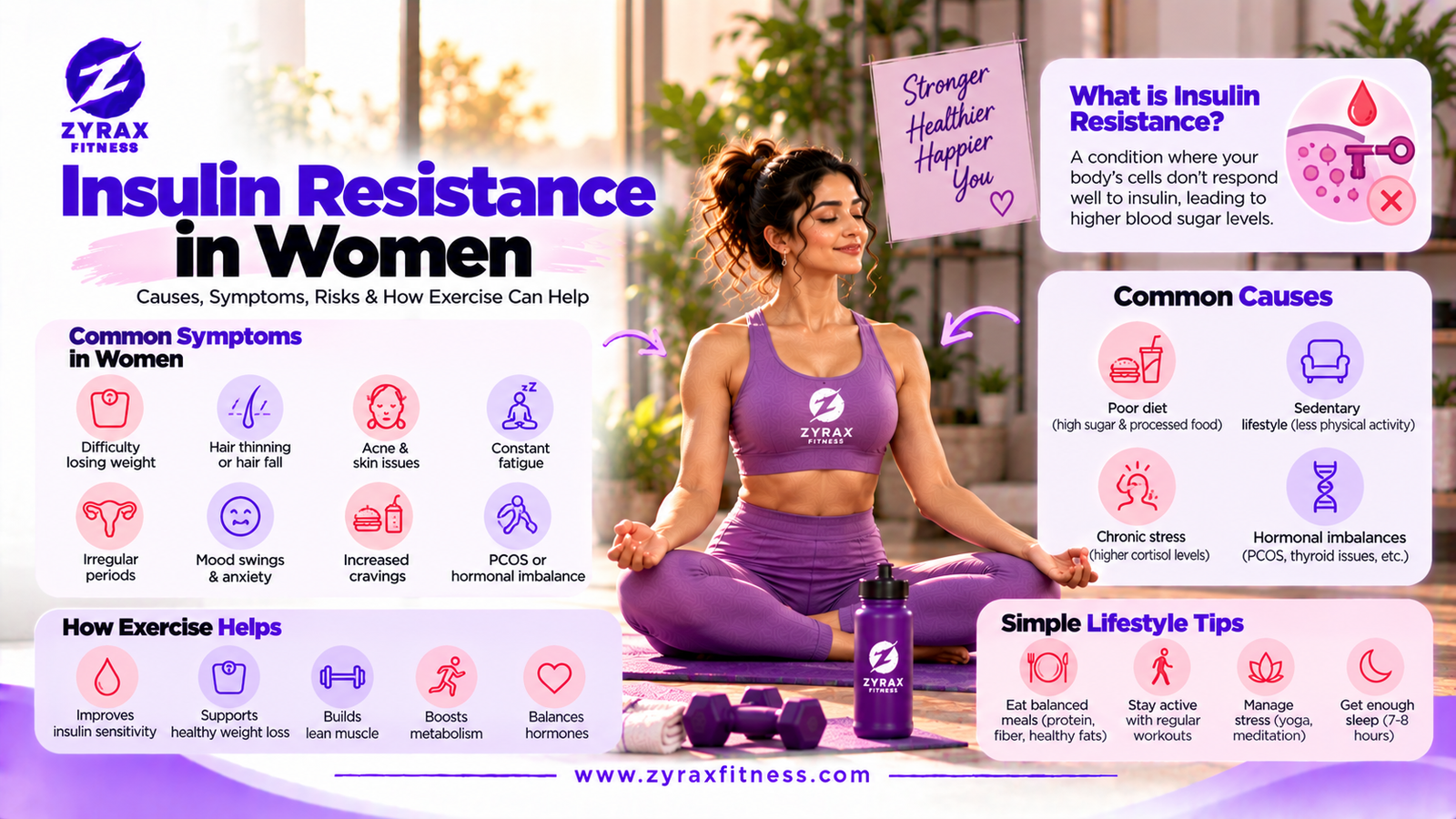
Insulin is the hormone that helps your muscle, fat and liver cells take up sugar from the blood. In insulin resistance, those cells respond poorly, so glucose stays in the bloodstream. Over time this can lead to prediabetes and type 2 diabetes, according to the US National Institute of Diabetes and Digestive and Kidney Diseases (NIDDK).
Insulin resistance usually causes no symptoms, according to NIDDK. Some clues that are worth discussing with a doctor, none of which prove anything on their own:
You cannot diagnose yourself from this list. If you recognise several, book a check-up.
NIDDK notes that insulin resistance itself is not routinely tested; the specific test is used mainly in research. Doctors usually look at blood sugar instead. In the US guidance NIDDK cites, prediabetes is diagnosed with an A1C of 5.7% to 6.4% or a fasting glucose of 100 to 125 mg/dL. Your doctor will interpret your results using the criteria they follow, along with your symptoms, periods and family history.
Limits to keep in mind: most of this evidence is in women with PCOS, trial sizes vary, and results differ between people. Exercise is one part of the picture, alongside food, sleep, stress and, where prescribed, medicines. NIDDK notes that doctors may prescribe metformin for some people, which is a decision for you and your doctor.
World Health Organization guidance for adults is at least 150 minutes of moderate activity a week, and PCOS guidance follows the general adult targets. Strength training on two days a week is a common adult recommendation. Treat these as long-term targets and build up gradually.
| Part of the Week | What to Do | Notes |
|---|---|---|
| Moderate cardio, 3 to 5 days | Brisk walking, low-impact Zumba, cycling or an easy dance session, 20 to 40 minutes | You should be able to talk but not sing. See steps a day for weight loss. |
| Strength, 2 days | Squats, glute bridges, wall push-ups, bands or light weights | Muscles take up sugar from the blood, so building them is useful. Start light. |
| Calming practice, 2 to 3 days | Yoga or slow breathing, 10 to 20 minutes | Supports sleep and stress. See yoga for better sleep. |
| Daily movement | Take regular short walks, stand up every hour | Breaks up long sitting spells. |
For PCOS-specific routines, see best workouts for PCOD and PCOS. For food, start with the PCOS diet chart for Indian women and the guide to daily protein for Indian women, and ask a doctor or qualified nutritionist before changing your diet, especially if you take medicines. Sleep also matters: NIDDK lists enough sleep among the habits that support healthy blood sugar.
If you take medicines for blood sugar, ask your doctor how to exercise safely, because activity can change how much medicine you need.
The hardest part is regularity. Live online classes give you a fixed time and a trainer to follow. Zyrax offers online Zumba and online yoga for women, and nutrition guidance from our certified nutritionist team. These are fitness and wellness services and do not replace medical care.
Insulin resistance is common, often silent and responsive to everyday habits. Get your numbers checked, build a routine of moderate cardio, strength and rest, and lean on your doctor for medical decisions. If you want a consistent schedule with live guidance, message the Zyrax team on WhatsApp to choose an online class that fits your week.
Yes. In PCOS it occurs across body sizes, and South Asian women may develop it at lower weights. Only a doctor can assess it.
No. It can come before prediabetes and type 2 diabetes, but not everyone with insulin resistance develops diabetes. Diagnosis of diabetes uses blood tests.
Studies, including in women with PCOS, show better insulin-related markers after regular exercise. It is a supportive habit, not a cure.
The PCOS guideline found no single best type or intensity. A mix of moderate cardio, strength training and relaxation that you can keep doing is a sensible choice.
No. It is a common feature of PCOS, but you can have PCOS without it, and insulin resistance can occur without PCOS.
References: NIDDK, Prediabetes and insulin resistance · Teede HJ et al. International evidence-based guideline for the assessment and management of PCOS, 2023, summarised in Acta Obstetricia et Gynecologica Scandinavica, 2024 · Narrative review of exercise in PCOS and insulin resistance · Ganie MA et al. Prevalence, phenotypes and comorbidities of PCOS among Indian women. JAMA Network Open, 2024 · Expert statement on exercise in PCOS, CASES / TSES, 2026 · South Asian women with PCOS, Endocrine Abstracts · WHO, Physical activity fact sheet
Key Takeaways
Ready To Begin?
Join Zyrax Fitness's live online Zumba and yoga classes and make your fitness journey fun again.
Start Your Journey