In This Guide
Want to start exercising at home but don't know where to begin? If traditional workouts feel too challenging, wall Pilates can be a simple way to introduce controlled movements into your fitness routine.
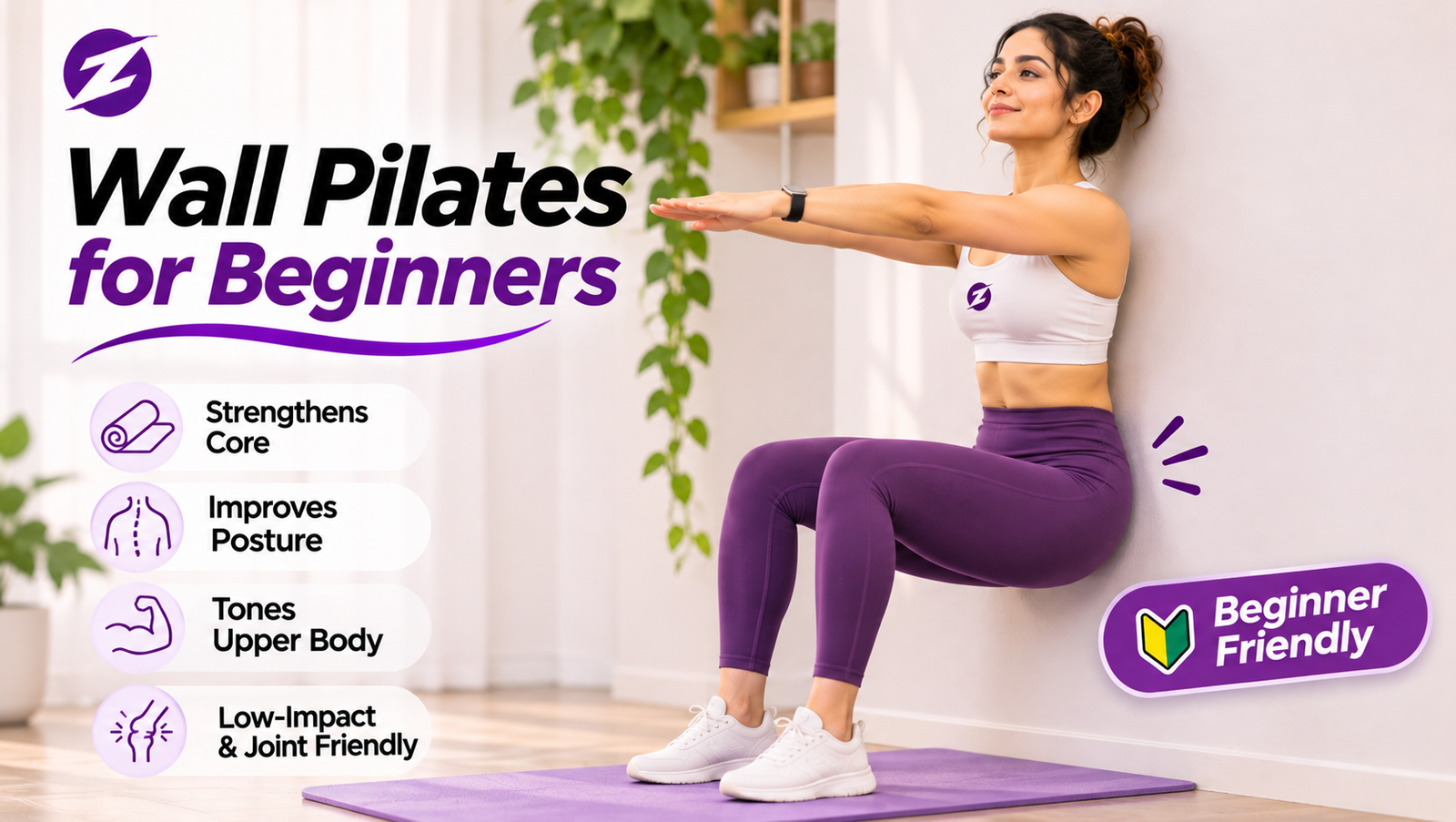
Wall Pilates is a modified form of Pilates that uses a wall for support and resistance. It focuses on controlled movements, core engagement, posture, flexibility and body awareness.
The best part? You don't need expensive equipment, a gym membership or a large workout space. A sturdy wall and a little room are enough to get started.
In this guide, you'll discover the benefits of wall Pilates, 8 beginner-friendly wall Pilates exercises, a 15-minute home workout and practical tips to help you practise safely.
Wall Pilates is a variation of traditional Pilates in which a wall is used as a support surface during different exercises.
Instead of relying entirely on floor-based movements, you use the wall to help control your body position, maintain balance and perform movements with greater awareness.
A beginner-friendly wall Pilates workout may include:
Wall Pilates can be adapted to different fitness levels, making it an approachable option for women who want to begin exercising at home.
Wall Pilates combines controlled movement with body awareness. Practising regularly may help develop several aspects of physical fitness.
Many Pilates movements involve engaging the abdominal and surrounding core muscles. Wall-supported exercises can help beginners practise controlled movements while focusing on core stability.
Some wall Pilates exercises involve gentle stretching of the legs, hips and back. Practising these movements within a comfortable range may help improve flexibility over time.
Exercises that involve controlled alignment can help you become more aware of how you position your shoulders, hips and spine. This may be useful if you spend long hours sitting at a desk. Dance workouts can support this too, as we explain in can Zumba improve your posture and core strength.
Using a wall as a support can make certain movements easier to practise. As you become more comfortable, you can gradually work on balance and movement control.
Wall Pilates requires very little equipment and can be practised in a small room. It is a convenient option for women who prefer exercising at home.
A short workout can be easier to fit into a busy schedule than a long exercise session. Consistency is important when developing strength and improving overall fitness.
Note: Research specifically examining wall Pilates is limited. Benefits should not be exaggerated or presented as guaranteed results. General Pilates research cannot automatically establish the effectiveness of every wall Pilates routine.
Here are eight simple wall Pilates exercises you can try at home. Start slowly, focus on controlled movement and avoid pushing your body beyond its comfortable range.
Wall squats work the thighs and glutes while the wall supports your back.
How to do it:
Repetitions: 8–10 times.
Beginner tip: Avoid lowering too far if your knees feel uncomfortable.
This exercise targets the glutes and helps practise controlled hip movement.
How to do it:
Repetitions: 10–12 times.
Beginner tip: Keep your movements small and avoid arching your lower back.
Wall-supported leg raises help work the hip muscles and practise balance.
How to do it:
Repetitions: 10 times per leg.
Wall roll downs encourage controlled spinal movement and body awareness.
How to do it:
Repetitions: 5–6 times.
Tip: Avoid forcing the movement or attempting to touch your toes.
Wall planks are a beginner-friendly way to practise core engagement.
How to do it:
Duration: 15–20 seconds.
Beginner tip: Stand closer to the wall to make the exercise easier.
Wall marching helps practise coordination and controlled leg movement.
How to do it:
Repetitions: 10–12 per leg.
Calf raises strengthen the muscles at the back of your lower legs.
How to do it:
Repetitions: 12–15 times.
This stretch can help improve comfortable movement in the back of your legs.
How to do it:
Duration: 15–20 seconds per leg.
Tip: Never force a stretch or lock your knee.
If you are new to Pilates, start with this simple routine.
| Exercise | Duration |
|---|---|
| Gentle warm-up and breathing | 2 minutes |
| Wall squats | 2 minutes |
| Wall glute bridge | 2 minutes |
| Wall leg raises | 2 minutes |
| Wall plank | 2 minutes |
| Wall marching | 2 minutes |
| Wall calf raises | 1 minute |
| Gentle stretching and relaxation | 2 minutes |
Take short breaks whenever needed. You can reduce the number of repetitions or skip an exercise if it feels uncomfortable.
Start with two or three sessions per week and adjust according to your fitness level and recovery.
Wall Pilates has become popular among people looking for a convenient home workout. But can wall Pilates help with weight loss?
Wall Pilates involves physical movement and can contribute to your overall activity level. Some exercises also help strengthen muscles.
However, wall Pilates does not directly burn belly fat or guarantee weight loss.
Sustainable weight management depends on several factors, including:
If your goal is weight management, consider combining wall Pilates with walking, Zumba or other suitable aerobic activities and balanced nutrition.
Want to add cardio to your home routine?Our live online Zumba classes and online yoga classes are led by certified instructors and pair well with wall-based strength work, with morning and evening batches that fit around your day.
Book a Free TrialYou do not need to practise wall Pilates every day. A balanced weekly schedule can include different forms of movement.
| Day | Activity | Duration |
|---|---|---|
| Monday | Wall Pilates | 15 minutes |
| Tuesday | Walking or Zumba | 25–30 minutes |
| Wednesday | Wall Pilates | 15 minutes |
| Thursday | Gentle yoga and stretching | 15–20 minutes |
| Friday | Wall Pilates | 15 minutes |
| Saturday | Walking or dance fitness | 25–30 minutes |
| Sunday | Rest and recovery | — |
Adjust the schedule to suit your fitness level. If you are a beginner, start with fewer sessions and gradually increase your activity. When you are ready for more challenge, our strength training plan for women at home builds on these basics. For Thursday's session and rest days, a few calming poses from yoga for better sleep can support relaxation and recovery.
One reason wall Pilates is convenient is that it requires very little equipment. Before starting, make sure you have:
You do not need special Pilates machines or expensive accessories to practise basic wall-supported movements.
Wall Pilates is not automatically suitable for everyone. Keep these precautions in mind:
If you have an injury, recent surgery, pregnancy-related exercise concerns or a medical condition, consult a qualified healthcare professional before beginning a new exercise programme.
When starting wall Pilates for beginners, avoid these common mistakes:
Start with the basics and gradually increase the difficulty as your strength and confidence improve.
Wall Pilates for beginners can be a convenient way to start exercising at home without investing in expensive equipment.
With a simple wall, a little space and a consistent routine, you can practise controlled movements that support strength, flexibility, balance and body awareness.
Start with the basic exercises, listen to your body and gradually build a routine that fits your lifestyle.
Looking for more ways to stay active? Explore Zyrax Fitness for enjoyable Zumba and yoga sessions that can complement your home fitness routine.
Yes. Wall Pilates can be adapted for beginners because the wall provides support during certain movements. Start with simple exercises and focus on correct movement.
Yes. Most basic wall Pilates exercises require only a sturdy wall and enough floor space. A yoga mat is optional but may make floor exercises more comfortable.
Beginners can start with a 10–15-minute session two or three times per week. Increase the duration gradually according to your comfort and recovery.
Wall Pilates can contribute to your overall physical activity and help strengthen muscles. However, it does not guarantee weight loss or selectively burn belly fat.
Many women over 40 can adapt wall Pilates to their fitness level. Choose appropriate movements and consult a healthcare professional if you have health concerns or injuries.
Traditional Pilates includes mat-based and equipment-based exercises. Wall Pilates uses a wall as a support surface to modify or assist certain movements.
You may practise gentle mobility movements frequently, but beginners should allow time for recovery between more demanding strength sessions. A few sessions per week can be a reasonable starting point.
No exercise can selectively remove fat from one specific body area. Wall Pilates can strengthen muscles, but overall fat loss depends on broader lifestyle factors.
Medical disclaimer: This article is for general educational purposes only and is not a substitute for professional medical advice, diagnosis or treatment. Consult a qualified healthcare professional before starting a new exercise programme if you have a medical condition, injury or other health concerns.
Key Takeaways
Ready To Begin?
Join Zyrax Fitness's live online Zumba and yoga classes and make your fitness journey fun again.
Start Your Journey