In This Guide
Have you ever noticed that your weight increases a few days before your period, even though your eating habits and exercise routine have not changed?
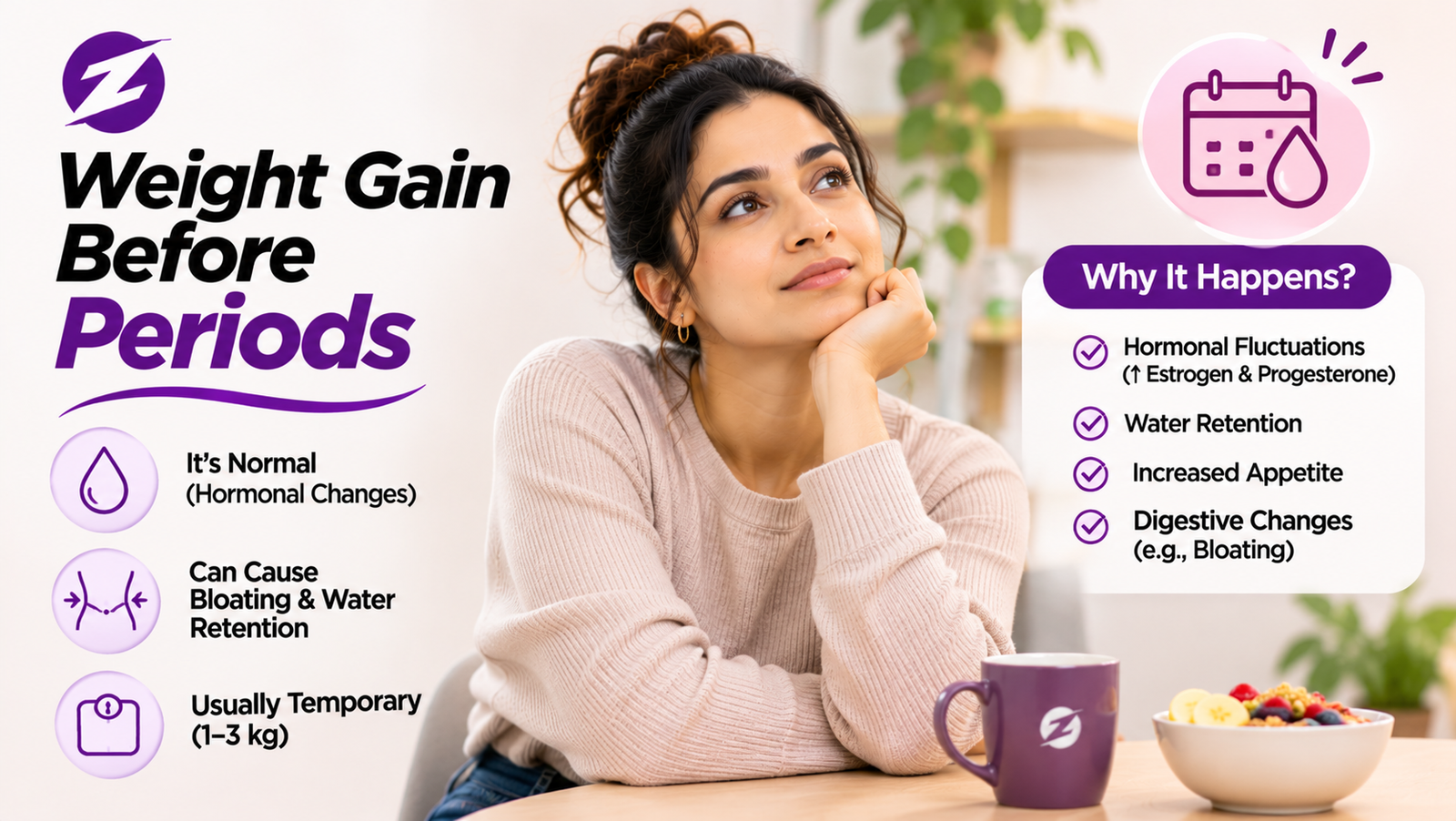
You are not alone. Many women experience temporary weight fluctuations before menstruation. This is commonly associated with hormonal changes, water retention, bloating, and digestive changes during the menstrual cycle.
The good news is that weight gain before periods is usually temporary and does not necessarily mean you have gained body fat.
In this guide, we'll explain why weight increases before periods, how many days it can last, what may help reduce bloating, and when you should consult a healthcare professional.
Yes. Temporary weight gain before periods is common.
During the days leading up to menstruation, hormonal fluctuations can affect how your body retains water and how your digestive system functions.
You may notice:
These changes are generally associated with premenstrual symptoms and often improve once your period begins or during the first few days of menstruation.
Remember that every woman's menstrual cycle is different. Not everyone experiences noticeable weight changes.
Several factors can contribute to temporary weight gain before menstruation.
One of the main reasons for weight fluctuations before periods is water retention.
Hormonal changes throughout the menstrual cycle can influence how your body regulates fluids and sodium. As a result, you may temporarily retain more water and notice an increase in body weight.
This is not the same as gaining body fat.
Oestrogen and progesterone levels change throughout the menstrual cycle. These hormonal changes can influence fluid balance, appetite, digestion, and other premenstrual symptoms.
This is one reason why your body may feel different during the days leading up to menstruation.
Some women experience stronger food cravings before their periods. You may feel like eating more frequently or prefer foods that are salty, sweet, or rich in carbohydrates.
Eating more sodium-rich foods may contribute to additional water retention, while changes in food intake can also influence temporary weight fluctuations.
Hormonal fluctuations can affect gastrointestinal activity. Some women experience constipation, gas, or abdominal bloating before menstruation.
These symptoms can make your stomach feel fuller and heavier, even without significant changes in body fat.
Premenstrual symptoms such as fatigue, cramps, and discomfort may reduce your usual physical activity. If you move less than usual, your daily routine may change temporarily.
This can contribute to changes in digestion, appetite, and weight. Planning lighter sessions for these days is part of cycle-syncing your workouts.
There is no fixed number of days for every woman.
Temporary weight changes may begin during the luteal phase, which occurs after ovulation and before menstruation. Some women notice changes:
The timing and severity depend on individual hormonal patterns and other factors.
You may notice that your weight returns towards its usual level once menstruation begins or shortly afterwards.
There is no universal average that applies to every woman. Some women notice almost no change, while others experience more noticeable temporary fluctuations.
The amount can depend on:
A temporary increase on the weighing scale should not automatically be interpreted as fat gain.
If the increase is substantial, persistent, or accompanied by unusual swelling, discuss it with a healthcare professional.
Want gentle workouts that fit every week of your cycle?Join our live online yoga or low-impact Zumba classes for women, with certified instructors who show easier options for days when you feel bloated or tired.
Book Your TrialWeight fluctuations can happen both before and during menstruation.
| Before Periods | During Periods |
|---|---|
| Hormonal changes may contribute to water retention | Fluid retention may continue temporarily |
| Bloating may increase | Bloating may gradually improve |
| Food cravings may become noticeable | Appetite may return towards normal |
| Breast tenderness may occur | Breast tenderness may gradually decrease |
| Constipation may occur | Digestive patterns may change |
These patterns are not identical for everyone. Some women feel bloated before menstruation, while others notice symptoms during their period.
Although you cannot completely prevent normal hormonal fluctuations, certain lifestyle habits may help manage bloating and discomfort.
Drinking enough water throughout the day supports normal body functions. Avoid deliberately reducing your water intake to control temporary weight gain.
Eating too much sodium may contribute to fluid retention. Try limiting:
You do not need to eliminate salt completely. Focus on balanced intake.
Fibre supports digestive health and may help manage constipation. Include foods such as seasonal fruits, green vegetables, oats, whole grains, and lentils and beans.
Increase fibre gradually and drink enough water.
Avoid skipping meals to compensate for temporary weight gain. Include a combination of protein, healthy fats, fibre-rich carbohydrates, and vegetables.
Balanced meals can help you maintain consistent energy and manage hunger.
Sleep disturbances can occur before menstruation and may influence appetite, mood, and energy levels. Try to maintain a consistent sleep schedule and give your body enough time to rest.
Gentle physical activity may help some women manage premenstrual symptoms, including bloating, discomfort, and mood changes. For the wider picture on mood and other symptoms, see our guide to exercise for PMS.
You do not need an intense workout. Choose movements that feel comfortable for your body.
Walking is a simple way to stay active during the days before menstruation. A comfortable walk may help you maintain daily movement and support overall well-being.
Gentle yoga combines movement, stretching, and relaxation. You can try comfortable poses such as Cat-Cow, Butterfly Pose, and Child's Pose if they feel suitable for you.
If you enjoy dancing, low-impact dance workouts can be an enjoyable way to remain active. Choose comfortable movements and reduce the intensity if you experience cramps or fatigue. Read more about Zumba during periods.
If you already practise strength training, you may continue with a comfortable routine. Adjust your workout intensity according to your energy levels and avoid pushing through pain or exhaustion.
Temporary weight fluctuations are generally not a reason to panic. However, you should consult a healthcare professional if you experience:
Conditions such as thyroid disorders, PCOS, and other health concerns can influence weight and menstrual patterns. A healthcare professional can help identify the underlying cause.
Urgent: Sudden one-sided leg swelling, particularly with pain, redness, or warmth, needs urgent medical assessment.
Weight gain before periods is a common experience and is often related to temporary water retention, hormonal fluctuations, and digestive changes.
Instead of worrying about every change on the weighing scale, focus on staying hydrated, eating balanced meals, getting enough sleep, and maintaining comfortable physical activity.
Remember that your body naturally changes throughout the menstrual cycle. A temporary increase in weight does not automatically mean you have gained fat or lost progress towards your fitness goals.
At Zyrax Fitness, we believe that understanding your body is an important part of building a healthy and sustainable fitness routine.
Yes. Many women experience temporary weight fluctuations before menstruation due to water retention, hormonal changes, bloating, and digestive changes.
It varies between women. Some notice weight changes around a week before menstruation, while others experience them only a few days before their period.
There is no fixed average for everyone. Some women experience very small changes, while others notice more noticeable temporary fluctuations.
It is commonly related to temporary water retention and bloating rather than actual body fat gain. Changes in food intake can also contribute to fluctuations.
It can happen both before and during menstruation. For many women, bloating and fluid retention gradually improve once their period starts or shortly afterwards.
Gentle walking may help some women manage premenstrual discomfort and maintain regular physical activity. It does not guarantee that water retention will disappear.
You do not necessarily need to stop weighing yourself. However, remember that menstrual-cycle-related fluctuations can affect the number on the scale. Comparing weight trends over several weeks may provide a more useful picture.
For many women, temporary weight fluctuations improve after menstruation begins or within the first few days. The timing varies between individuals.
Medical Disclaimer: This article is for general educational purposes only and is not a substitute for professional medical advice, diagnosis, or treatment. Consult a healthcare professional if weight changes are persistent, severe, or accompanied by unusual swelling or other concerning symptoms.
Key Takeaways
Ready To Begin?
Join Zyrax Fitness's live online Zumba and yoga classes and make your fitness journey fun again.
Start Your Journey