In This Guide
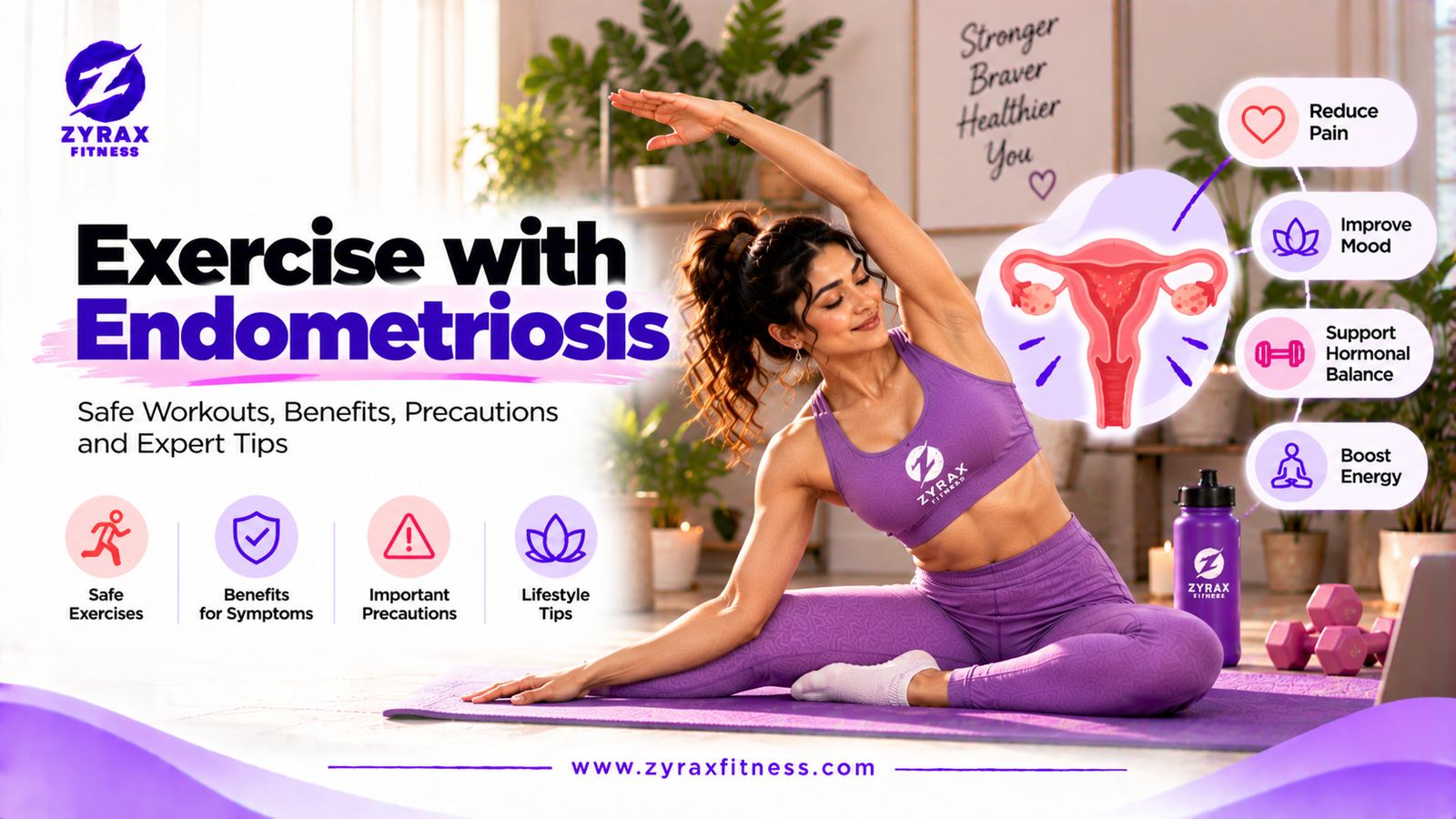
Endometriosis affects about 10% of women of reproductive age worldwide, according to the World Health Organization. If you are one of them, you have probably been told to "just exercise" by someone who has no idea how a flare feels. This guide gives you the honest version: what the research shows, which kinds of movement tend to suit, what to go easy on, and when to speak to your doctor first.
Quick answer: Exercise does not treat or remove endometriosis. For many women, regular gentle movement helps with pain, mood and energy, while intense workouts can make symptoms worse for some. Start small, track how you feel, and plan with your gynaecologist.
Endometriosis is a condition where tissue similar to the lining of the uterus grows outside it. WHO lists severe period pain, heavy bleeding, pelvic pain that continues after the period ends, bloating and nausea, and difficulty conceiving among its main effects. There is no cure at present. Care focuses on managing symptoms, with pain relievers, hormone-based medicines and, for some women, surgery.
So exercise is a supporting tool for how you feel day to day. It is not a replacement for medical care. If severe period pain keeps you from work, study or sleep, please see a gynaecologist rather than treating it as normal.
The evidence is encouraging but not settled.
The practical reading: gentle to moderate movement is a reasonable bet for most women, and the right level is individual. There is no endometriosis-specific exercise guideline, as the Victorian Government's physical activity resource notes.
Walking is the easiest place to start and the easiest to scale down on a bad day. If you want a structured session without jumping, try the 25-minute low-impact cardio workout.
A small 2017 randomised trial of hatha yoga reported less pelvic pain, as described by Healthline. Poses women commonly use on tender days include child's pose, cat-cow, reclined bound angle pose and legs up the wall. Move slowly, skip deep twists or anything that squeezes the abdomen if it hurts, and treat breathing as part of the practice. For back and hip tightness, see yoga for back pain and lower back pain in women.
On better days, a low-impact online Zumba class can lift mood and energy. Keep your feet close to the floor, skip jumps, take water breaks and cut the session short if pain builds. Our guide to Zumba with knee pain explains how to modify steps, and the same ideas apply here.
In endometriosis the pelvic floor muscles can become tense and guarded. Slow belly breathing helps them let go. Be careful with Kegels: if your pelvic floor is already tight, squeezing harder may not help. Ask a pelvic health physiotherapist before starting, and read our Kegel exercises guide with that in mind.
Bodyweight or light-resistance work supports posture and bones, and the 2025 review noted a possible benefit for bone density. Build up slowly.
There is no standard prescription, so use this as a starting frame and adjust it with your doctor or physiotherapist.
| Day Type | Time | What to Do |
|---|---|---|
| Flare day | 5 to 10 minutes, or rest | Slow breathing, gentle stretches, a short walk if it feels okay. Rest is a valid choice. |
| Lower-pain day | 15 to 20 minutes | Easy walk or a gentle yoga session. |
| Better day | 20 to 30 minutes | Low-impact Zumba or yoga, plus 10 minutes of light strength work. |
Start at about 10 minutes and add 5 minutes a week only if symptoms stay stable. Keep a simple note of pain, energy and what you did for two to three cycles; patterns show up faster than you expect. The usual adult target of at least 150 minutes of moderate activity a week from WHO is a long-term aim, not a starting point. If you also want to understand how periods and workouts interact, read Can you do Zumba during periods? and our guide to exercise for period cramps.
Book an appointment if you have:
Seek urgent care for chest pain, extreme breathlessness or a racing heartbeat during exercise. Do not start pain medicines without your doctor's advice.
Live online classes let you stay close to your bathroom, your heating pad and your own pace. Tell your trainer beforehand that you may need to stop or slow down, keep water nearby, and treat the class as fitness support, not treatment. You can explore Zyrax's online yoga classes and online Zumba classes and choose the intensity that suits the day.
Movement can be one of the kinder tools in your endometriosis toolkit when it is gentle, gradual and led by how you feel. Start with 10 minutes, keep a short log, and bring the pattern to your gynaecologist. When you are ready for guided sessions, message the Zyrax team on WhatsApp to find an online yoga or low-impact Zumba class that suits your energy levels.
Many women can, in a low-impact form, if their doctor agrees and their pain allows. Skip jumps, keep the effort at a level where you can talk, and stop if pain builds.
Gentle yoga is widely used and a small trial reported less pelvic pain. It cannot cure the condition, and results vary from person to person.
There is no universal list. Many women find high-impact moves, very intense cardio and heavy core work aggravate pain, especially during flares. Let your own symptoms guide you.
Only if it feels right. Slow breathing or a short walk may help, and rest is perfectly acceptable.
No. Exercise may help with pain, mood and quality of life, but it does not remove endometriosis, and WHO states that there is currently no cure.
References: World Health Organization, Endometriosis fact sheet · Physical activity and exercise in women with endometriosis: systematic review and meta-analysis (2025) · Effect of physical activity and exercise on endometriosis-associated symptoms: systematic review, BMC Women's Health (2021) · Exercise and endometriosis: do's and don'ts, Victorian Government · Endometriosis and exercise, Healthline · Endometriosis and exercise, Medical News Today · World Health Organization, Physical activity fact sheet
Key Takeaways
Ready To Begin?
Join Zyrax Fitness's live online Zumba and yoga classes and make your fitness journey fun again.
Start Your Journey