In This Guide
Fatty liver disease occurs when excess fat builds up in the liver. It is often associated with conditions such as obesity, type 2 diabetes, high cholesterol, and high blood pressure. The condition may not cause noticeable symptoms in its early stages, making lifestyle changes and medical follow-up important.
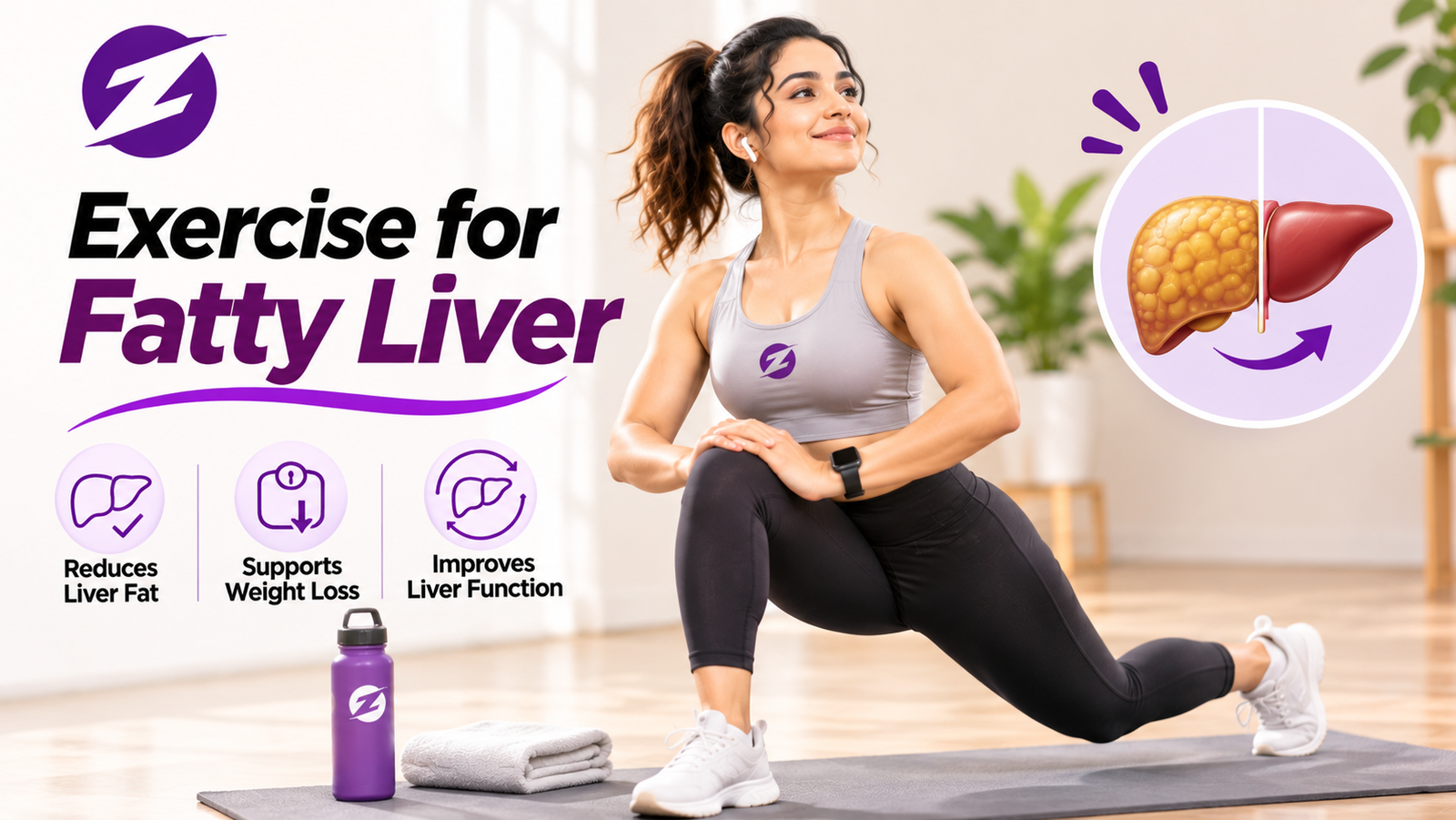
Regular physical activity is a key part of managing fatty liver disease. Exercise can help reduce liver fat, improve insulin sensitivity, and support overall metabolic health, even when significant weight loss does not occur.
In this guide, learn which exercises may help with fatty liver, how much activity to aim for, and how to begin safely.
Yes. Research and clinical guidance support regular physical activity as part of fatty liver management.
The Indian National Association for the Study of the Liver (INASL) recommends moderate-intensity aerobic or resistance exercise for 30–45 minutes a day, at least five days a week, for people with fatty liver disease, regardless of body weight.
The 2025 Indian expert consensus on metabolic dysfunction-associated steatotic liver disease (MASLD) also identifies exercise and lifestyle modification as important parts of management.
Exercise may help reduce liver fat and improve metabolic health. However, its effects on liver inflammation and fibrosis are less certain, and exercise should be combined with appropriate medical care.
The most suitable activity depends on your fitness level, medical conditions, and personal preferences. Start gradually and choose activities you can maintain consistently.
Brisk walking is a simple, accessible form of aerobic exercise. You can walk outdoors, on a treadmill, or in shorter sessions throughout the day. A short walk after dinner is an easy way to add some of it.
How to start: Begin with a comfortable pace and gradually work toward 30 minutes of brisk walking on most days.
Cycling can improve cardiovascular fitness while offering a lower-impact alternative to running. You can use a stationary bike or cycle outdoors on a safe route.
How to start: Begin with a short, easy ride and increase duration as your fitness improves.
Swimming and water-based exercise can provide aerobic activity while reducing impact on the joints.
How to start: Choose a comfortable pace and take breaks as needed.
Resistance exercise helps build and maintain muscle. It can include bodyweight movements, resistance bands, or weights. Our home exercises without equipment are one place to begin.
How to start: Begin with light resistance and focus on proper technique. Ask a qualified trainer or physiotherapist for modifications if needed.
Dance-based workouts such as Zumba can be an enjoyable way to increase physical activity. Choose a beginner-friendly class and modify movements according to your fitness and joint comfort. For a no-jump option, see our low-impact cardio workout.
How to start: Begin with low-impact steps and gradually increase intensity.
INASL guidance recommends:
This recommendation is a target to work toward, not a requirement to begin immediately. If you are currently inactive, start with shorter sessions and increase gradually.
At moderate intensity, you should generally be able to talk but not comfortably sing.
Exercise may reduce liver fat and improve insulin resistance even when body weight changes little. To understand the link, read insulin resistance in women.
For people who are overweight or obese, weight loss can provide additional benefits. Indian guidance associates weight loss of around 5% with reduced liver fat, 7–10% with improvement in steatohepatitis, and 10% or more with improvement in fibrosis.
However, people with fatty liver who have a normal body weight may also benefit from exercise and dietary changes. Do not assume that fatty liver only affects people who are overweight.
Want a routine that keeps you moving?Once your doctor is happy for you to exercise, our live online Zumba classes for women and online yoga give you a fixed time and low-impact options, from home.
Book Your TrialThis example is a starting framework for an adult who has been cleared for moderate exercise. Adjust it according to your ability and medical advice.
| Day | Suggested Activity |
|---|---|
| Monday | 30-minute brisk walk |
| Tuesday | 20-minute walk + light strength training |
| Wednesday | 30-minute cycling or walking |
| Thursday | 30-minute brisk walk |
| Friday | 20-minute walk + light strength training |
| Saturday | 30–45 minutes of walking, swimming, or dance fitness |
| Sunday | Rest or gentle movement |
If you are new to exercise, begin with 10–15 minutes and build up gradually.
Exercise works best as part of a broader health plan.
Do not start supplements or "liver detox" products without discussing them with a healthcare professional.
Before starting a new exercise routine, consult your healthcare professional if you have advanced liver disease, heart disease, uncontrolled diabetes, significant joint pain, or other medical concerns.
Exercise is not a substitute for liver assessment, prescribed treatment, or monitoring.
Regular physical activity is an important part of fatty liver management. Walking, cycling, swimming, strength training, and suitable dance workouts can help you build a sustainable exercise routine.
Start at your current fitness level, progress gradually, and work with your healthcare professional to manage fatty liver safely.
Brisk walking, cycling, swimming, and resistance training are useful options. The best exercise is one that suits your health and that you can practice consistently.
Indian guidance recommends 30–45 minutes of moderate exercise on at least five days a week. If you are a beginner, start with shorter walks and gradually increase your duration.
Exercise can help reduce liver fat and improve metabolic health. Whether liver disease reverses depends on several factors, including disease stage, diet, weight changes, and medical care.
Many people may be able to include Zumba or other dance fitness in their activity routine. Start with low-impact movements and check with your healthcare professional if you have other medical conditions or exercise limitations.
Yes. Fatty liver can occur in people with normal body weight. Exercise and dietary changes may still be beneficial.
Medical disclaimer: This article is for general informational purposes only and is not a substitute for professional medical advice, diagnosis, or treatment.
Key Takeaways
Ready To Begin?
Join Zyrax Fitness's live online Zumba and yoga classes and make your fitness journey fun again.
Start Your Journey