In This Guide
Hot flushes at 2 a.m., a mind that will not switch off, joints that complain on the stairs: menopause arrives differently for every woman. Many are told that exercise will fix it all. The research says something more useful. Exercise has not been proven to stop hot flushes, but it is still one of the best things you can do for your bones, heart, muscles, mood and sleep during this stage of life. Here is how to use it well.
Quick answer: A Cochrane review found insufficient evidence that exercise reduces hot flushes. Regular strength work, weight-bearing cardio, yoga and relaxation still support long-term health, and many women feel better for them. If symptoms disrupt your life, speak to a doctor about all your options.
According to the World Health Organization, natural menopause usually occurs between 45 and 55 and is confirmed after 12 consecutive months without a period. The years of change before that are called perimenopause; they start when your cycle begins to change and can last several years. Common symptoms include hot flushes and night sweats, irregular periods, vaginal dryness, urinary problems, insomnia, and mood changes such as low mood and anxiety. WHO notes that both hormonal and non-hormonal treatments can relieve symptoms, and that you should discuss options with a health-care provider.
In short: do not exercise expecting hot flushes to vanish, but do not skip it, because the other benefits are well established.
| Area | What Exercise May Do | How Sure Are We? |
|---|---|---|
| Hot flushes and night sweats | May reduce frequency or severity for some women | Mixed and limited. Treat as a bonus, not a treatment. |
| Mood and anxiety | Can lift mood and ease stress | Reviews of aerobic exercise suggest psychological benefits |
| Sleep | Regular activity and relaxation practices can help sleep | Plausible and commonly reported; not specific to menopause trials |
| Bones | Weight-bearing and resistance work supports bone strength after oestrogen falls | Well established as part of bone health advice |
| Muscle and joints | Strength training helps preserve muscle and keeps you moving | Well established for adults in general |
| Heart health | Regular activity lowers cardiovascular risk | Well established for adults in general |
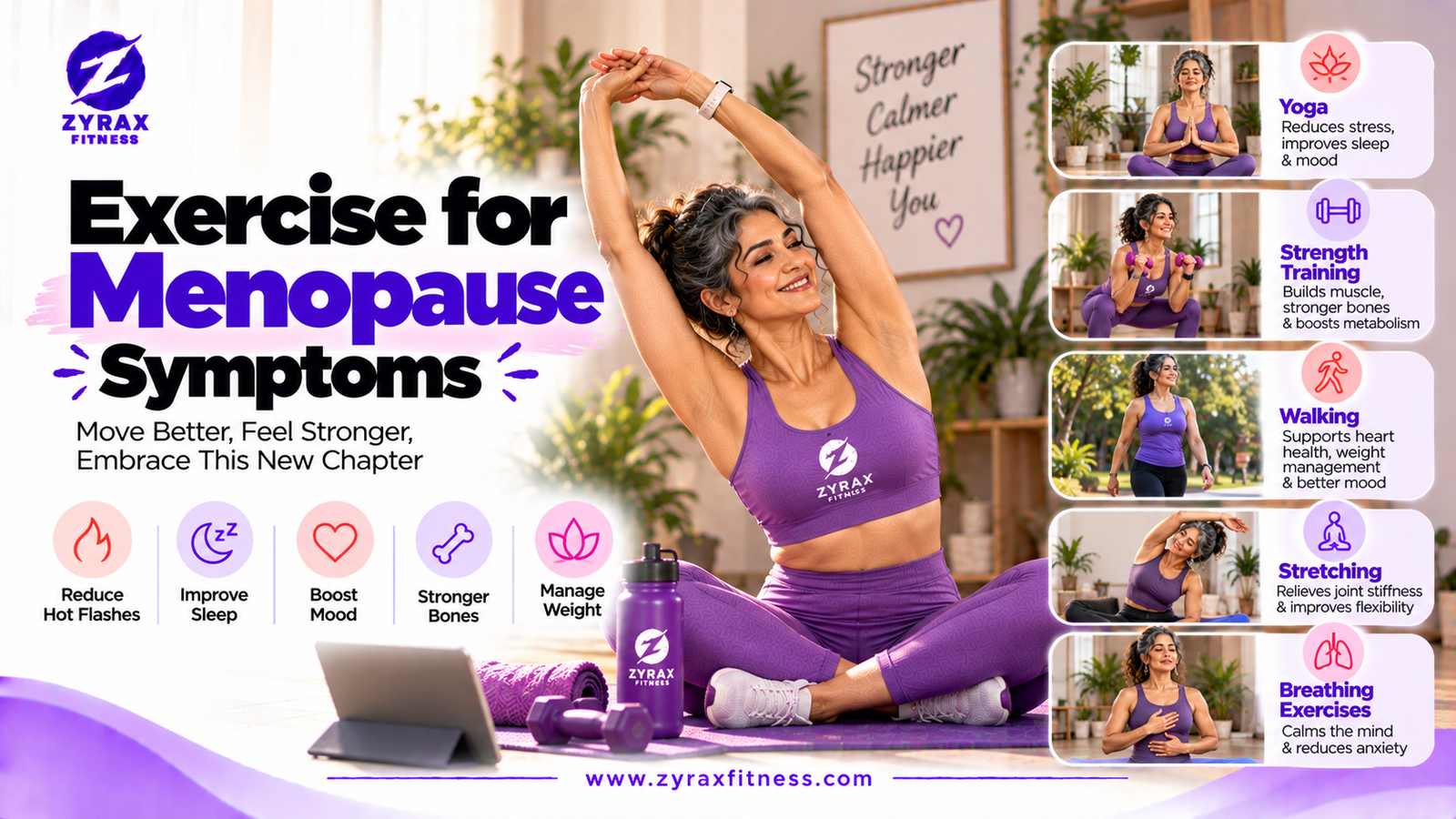
Squats to a chair, glute bridges, wall push-ups, resistance bands or light dumbbells. Add a little more resistance as it gets easy. This supports muscle and bone. For bone-focused moves, see exercises for strong bones.
Brisk walking, stairs and low-impact dance fitness. The general adult target from WHO is at least 150 minutes of moderate activity a week; build up from what you do now. Our guides to Zumba for women over 50 and home workouts for women over 40 show how to scale it.
Gentle yoga and slow breathing help with stress, stiffness and sleep. Try yoga for better sleep at night, and see mood swings and exercise.
WHO lists urinary incontinence among menopause symptoms. Pelvic floor exercises can help some women; learn the technique in our Kegel guide, and see a physiotherapist if leaks persist.
| Day | Activity | Time |
|---|---|---|
| Monday | Strength: squats, bridges, wall push-ups | 20 to 25 minutes |
| Tuesday | Brisk walk or low-impact Zumba | 30 minutes |
| Wednesday | Gentle yoga and breathing | 20 minutes |
| Thursday | Strength, plus balance work | 20 to 25 minutes |
| Friday | Brisk walk or low-impact Zumba | 30 minutes |
| Saturday | Yoga or an easy walk with family | 30 minutes |
| Sunday | Rest | – |
The three cardio sessions add up to about 90 minutes of moderate activity. Add short walks on other days to work towards the 150 minutes WHO recommends for adults, and start with fewer sessions if you are new.
A live online class lets you control the room temperature, take breaks during a flush and avoid travel. Zyrax runs online Zumba and online yoga for women, and you can work at your own intensity. If weight is also on your mind, see exercise for perimenopause weight gain.
Menopause is a stage of life, not a failure of fitness. Exercise will not promise to switch off hot flushes, but it protects your bones, heart, muscles and mood while you do the other work of looking after yourself, including talking to your doctor. To get started with live, low-impact guidance, message the Zyrax team on WhatsApp and choose an online class that fits you.
Evidence is mixed. A Cochrane review found no clear effect, while a small 2016 study reported fewer self-reported hot flushes after fitness-improving training. Exercise is worth doing for other reasons.
Gentle yoga can help with stress, stiffness and sleep, and there is some evidence for hot flushes, but it is not proven to be a treatment.
Low-impact Zumba is a weight-bearing, enjoyable form of cardio that suits many women. Choose the intensity that suits your joints and heart, and check with your doctor if you have a medical condition.
A mix: strength training twice a week, weight-bearing cardio, and yoga or breathing for stress and sleep.
No. Exercise and hormone therapy do different jobs. One small study in the Cochrane review suggested hormone therapy worked better for hot flushes. Whether to use it is a decision to make with your doctor.
The general adult target is at least 150 minutes of moderate activity a week. Build up gradually.
References: WHO, Menopause fact sheet · Daley A et al. Exercise for vasomotor menopausal symptoms. Cochrane Database of Systematic Reviews · Bailey TG et al. Exercise training and hot flushes. Menopause, 2016 · Exercise to reduce vasomotor and other menopausal symptoms: a review, University of Birmingham · Can exercise help with menopause symptoms? Fit&Well, summarising a study in Menopause · WHO, Physical activity fact sheet
Key Takeaways
Ready To Begin?
Join Zyrax Fitness's live online Zumba and yoga classes and make your fitness journey fun again.
Start Your Journey