In This Guide
Feeling bloated after a meal can be uncomfortable. Your stomach may feel full, tight or swollen, even when you haven't eaten much. For many women, bloating can also occur around their menstrual cycle or after changes in eating habits.
If you're looking for yoga for bloating, gentle movements and comfortable breathing exercises may help you relax and feel more comfortable. However, it is important to understand that yoga is not a proven treatment for the underlying causes of bloating.
In this guide, we'll explore gentle yoga poses for bloating and gas, how to practise them safely at home, what to do after meals and when persistent bloating needs medical attention.
Bloating is a feeling of fullness, pressure or swelling in the abdomen. Sometimes the stomach may also look visibly larger than usual.
Common reasons include:
Bloating can have several causes, so understanding your symptoms is important before choosing a solution.
Yoga involves gentle movement, stretching, breathing and relaxation. Some people find that moving comfortably and changing body positions helps them feel less stiff or uncomfortable.
However, there is limited high-quality evidence that specific yoga poses directly relieve gas or bloating.
Yoga may be useful as part of a general wellness routine because it can:
It should not replace medical evaluation when bloating is persistent, severe or associated with other concerning symptoms.
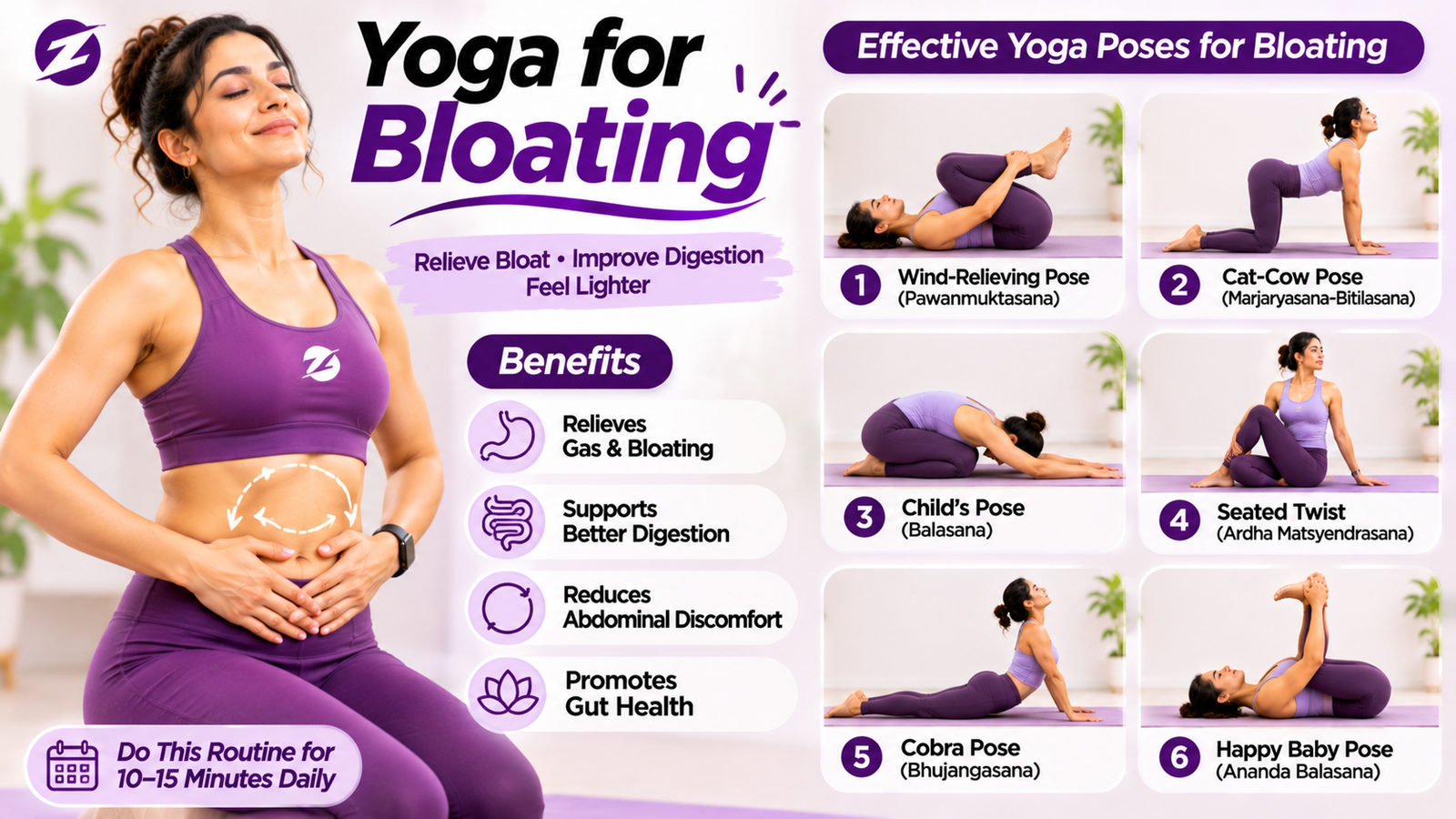
The following poses are gentle options you can try at home if they feel comfortable. Move slowly, avoid forcing stretches and stop if a pose increases your discomfort.
Cat-Cow is a gentle movement that involves alternating between two spinal positions. It can help you move your back comfortably and coordinate movement with breathing.
How to do it:
Duration: 8–10 slow repetitions.
Why try it? It encourages gentle spinal movement and can be a relaxing addition to your routine.
Child's Pose is a resting yoga posture that gently stretches the back and hips.
How to do it:
Duration: 20–30 seconds.
Beginner tip: Place a cushion between your thighs and calves if needed. If abdominal pressure feels uncomfortable, skip this pose.
This pose involves bringing your knees towards your chest while lying on your back.
How to do it:
Duration: 15–20 seconds per side.
Tip: Keep your breathing natural. Avoid pressing your abdomen.
This is a restorative posture that encourages relaxation and gentle hip opening.
How to do it:
Duration: 30–60 seconds.
Tip: Do not force your knees towards the floor.
A seated side stretch gently moves the sides of your torso.
How to do it:
Repetitions: 3–4 times per side.
Tip: Keep both sitting bones grounded and avoid bending forward.
This restorative position can be relaxing after a busy day.
How to do it:
Duration: 1–3 minutes.
Tip: Come out slowly. Avoid this position if it causes discomfort or if a healthcare professional has advised you against it.
Gentle breathing exercises can help you relax without putting pressure on your abdomen. Slow breathing is also a good way to wind down at night, as we explain in yoga for better sleep.
How to do it:
Duration: 2–3 minutes.
Tip: Avoid forceful breathing techniques or holding your breath, especially when you are already uncomfortable.
If you want to practise yoga at home, start with this short sequence.
| Order | Yoga Pose | Duration |
|---|---|---|
| 1 | Easy seated breathing | 2 minutes |
| 2 | Cat-Cow Pose | 2 minutes |
| 3 | Child's Pose | 1 minute |
| 4 | Supine Knee-to-Chest | 2 minutes |
| 5 | Seated Side Stretch | 2 minutes |
| 6 | Comfortable resting position | 1 minute |
Move gently and adjust the routine according to your comfort. You do not need to complete every pose.
Prefer to practise with a teacher?Our live online yoga classes are led by certified instructors who can suggest gentle modifications, with morning and evening batches that fit around your day.
Book a Yoga TrialMany people experience abdominal fullness after eating. If you feel bloated after lunch or dinner, it is important not to force yourself into deep stretches or abdominal-compression poses.
Instead, consider these simple habits:
A comfortable walk after eating may support digestion and help you avoid sitting still for long periods.
Allow yourself to feel comfortable before attempting a yoga session. Deep forward bends, strong twists and poses that compress your abdomen may feel unpleasant after a large meal.
Eating slowly and chewing properly may help reduce the amount of air you swallow while eating.
Keep track of foods and drinks that seem to cause discomfort. Individual triggers can vary.
Drink enough water throughout the day. Avoid suddenly increasing your fibre intake if it makes bloating worse.
Some women experience bloating, abdominal fullness or water retention before or during menstruation.
Hormonal changes during the menstrual cycle can contribute to these symptoms. The experience varies from person to person. If you notice the scale moving up before your period too, read our guide to weight gain before periods.
If you feel comfortable exercising during your period, gentle activities may be a useful way to relax. You can try:
Avoid forcing yourself to exercise when you are experiencing significant pain or fatigue. Choose rest when your body needs it.
If bloating is severe, persistent or accompanied by unusual menstrual symptoms, consult a healthcare professional.
Bloating and water retention can sometimes feel similar, but they are not the same thing.
| Bloating | Water Retention |
|---|---|
| Often involves abdominal fullness or pressure | Involves excess fluid collecting in body tissues |
| May be associated with digestive gas | May cause swelling or puffiness |
| Can occur after meals | Can be influenced by hormones, salt intake and certain health conditions |
| May be linked to constipation or food intolerance | May affect areas such as the hands, feet or ankles |
Yoga may help you relax and stay physically active, but it should not be considered a treatment for unexplained swelling or fluid retention.
Sudden swelling, especially with breathlessness or chest pain, requires urgent medical attention.
Occasional bloating is common, but persistent or unusual symptoms should not be ignored.
Consult a healthcare professional if you experience:
Seek urgent medical care if you experience sudden severe abdominal pain, vomiting blood, or severe abdominal symptoms with an inability to pass stool or gas.
Bloating can sometimes be associated with digestive conditions such as irritable bowel syndrome (IBS), food intolerances or other medical problems. A healthcare professional can help identify the cause.
Keep these points in mind when practising:
Bloating can affect your comfort, daily activities and confidence. Gentle yoga may be a relaxing addition to your routine, especially when combined with comfortable movement, balanced eating habits and adequate hydration.
Start with simple poses, avoid movements that increase abdominal pressure and pay attention to how your body responds.
Most importantly, remember that yoga is not a cure for digestive problems. If bloating becomes frequent, severe or unusual, seek professional medical advice.
Make movement a part of your everyday routine with Zyrax Fitness. Explore yoga and enjoyable fitness sessions that help you stay active, flexible and connected with your body.
There is no scientifically established best yoga pose for bloating. Gentle movements such as Cat-Cow, Child's Pose and a comfortable knee-to-chest variation may help some people feel more relaxed.
Yoga may help you relax and stay gently active, but strong scientific evidence that specific poses directly remove digestive gas is limited. Persistent symptoms should be evaluated by a healthcare professional.
It is better to avoid intense yoga and poses that compress your abdomen immediately after a meal. A gentle walk may be a more comfortable option.
Gentle yoga may help some women relax during their menstrual cycle. Choose comfortable poses and avoid movements that worsen cramps or abdominal discomfort.
Yoga can support general movement and relaxation, but it is not a proven treatment for water retention. Persistent or unexplained swelling needs medical evaluation.
You can begin with a gentle 5–10-minute routine if it feels comfortable. There is no established duration that guarantees relief from bloating.
Yes. Beginners can start with gentle movements such as Cat-Cow, supported Child's Pose and easy seated breathing. Use modifications and stop if you experience discomfort.
Medical disclaimer: This article is for general educational purposes only and does not replace professional medical advice, diagnosis or treatment. Consult a qualified healthcare professional if you have persistent symptoms or an existing medical condition.
Key Takeaways
Ready To Begin?
Join Zyrax Fitness's live online Zumba and yoga classes and make your fitness journey fun again.
Start Your Journey