In This Guide
"You have fibroids" is a sentence many women hear at a routine scan, often with no explanation of what to do about it. The question that follows is practical: can I still exercise? For most women with fibroids the answer is yes, with sensible limits. This guide covers what fibroids are, what research does and does not say about exercise, which movement tends to suit, and the symptoms that need a doctor.
Quick answer: Exercise has not been shown to shrink fibroids that are already there. The research mostly looks at whether active women are less likely to develop them. Regular, comfortable movement still supports general health, and low-impact options are usually gentler when you have heavy bleeding or pelvic pressure.
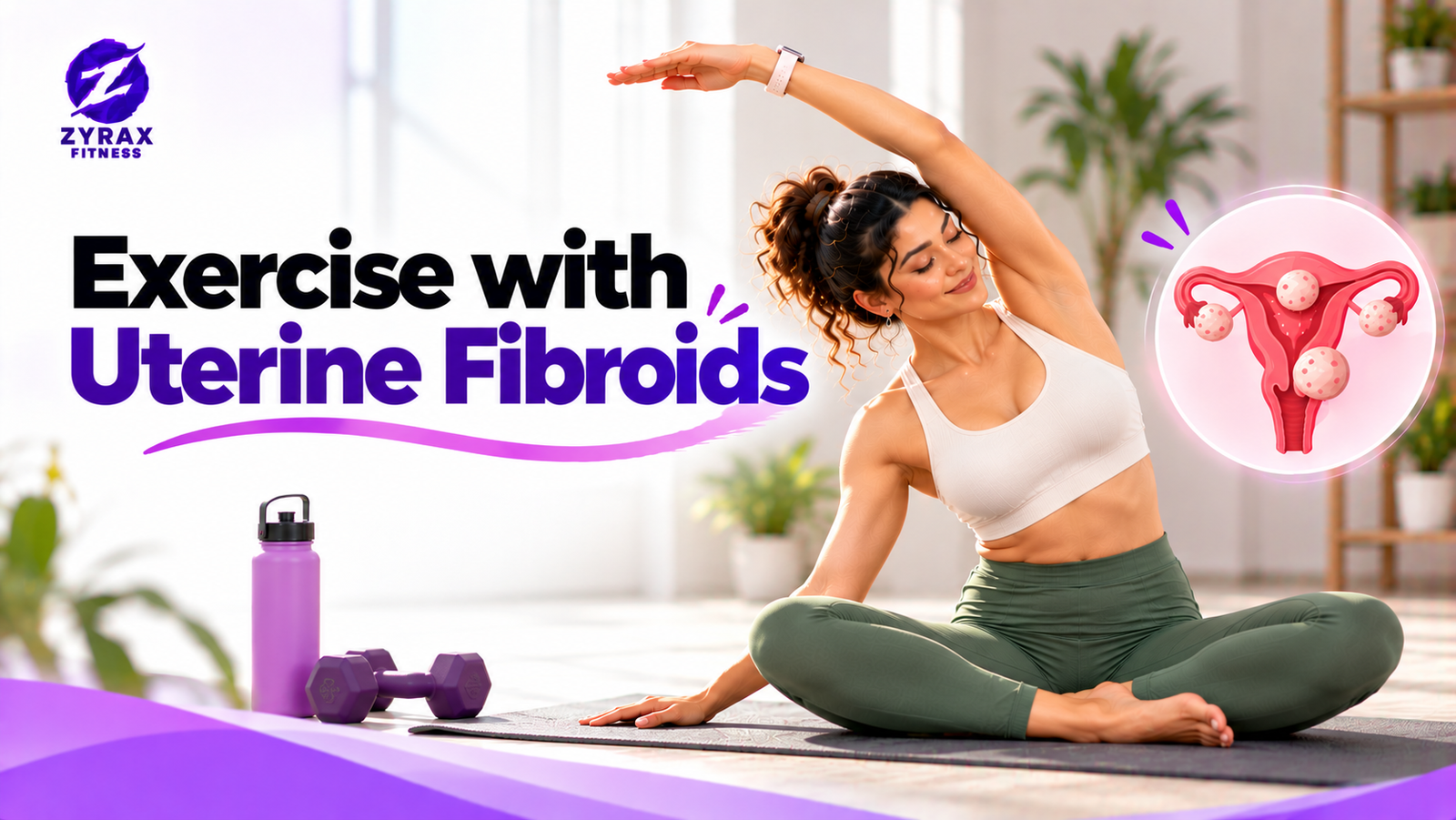
Fibroids are non-cancerous growths in the muscle wall of the uterus. They are common, and many women have them without knowing. When they do cause symptoms, these can include heavy or prolonged periods, painful periods, a feeling of pressure in the lower abdomen, needing to pass urine often, and constipation, according to a clinical nutrition guide from the Physicians Committee for Responsible Medicine. Heavy bleeding can also lead to low iron and anaemia.
Fibroids are diagnosed by a doctor, usually with an ultrasound. Treatment depends on your symptoms, age and whether you plan to have children, and may include medicines, procedures or surgery. That decision belongs with your gynaecologist.
The evidence is about risk, not treatment, and it comes mostly from observational studies. That means it shows a link, not proof of cause.
In short: staying active is a reasonable habit that may lower the chance of developing fibroids, but it is not a treatment.
For most women, yes. Fibroids do not make everyday exercise dangerous. How you feel is the guide. Take extra care in these situations:
A steady walk is the easiest place to start and easy to scale. For a structured session without jumping, try the 25-minute low-impact cardio workout.
Gentle yoga can ease stress and stiffness, and some women find it comforting during painful periods. Choose slow flows, avoid positions that squeeze the abdomen if they hurt, and see yoga for back pain for the lower back, which can ache with heavy periods.
An online Zumba class can be adapted: keep your feet low, skip jumps and take breaks. The modifications in Zumba with knee pain apply here too.
Bodyweight squats, glute bridges and wall push-ups support posture and general fitness. Keep the effort moderate and avoid straining or breath-holding.
Want a routine you'll actually stick to?Join our online Zumba classes for women or live online yoga, led by certified instructors, with morning and evening batches.
Book Your Trial| Day Type | Time | What to Do |
|---|---|---|
| Heavy-bleeding or low-energy day | 5 to 10 minutes, or rest | Slow breathing, a short walk, gentle stretches |
| Typical day | 20 to 30 minutes | Brisk walk or low-impact Zumba |
| Two days a week | 15 to 20 minutes | Light strength work |
| One or two days a week | 20 minutes | Gentle yoga |
The general adult target of at least 150 minutes of moderate activity a week from the World Health Organization is something to build towards, not a starting point. If period pain is part of your picture, read exercise for period cramps. If you are unsure whether your symptoms are fibroids or endometriosis, see exercise with endometriosis and ask your doctor.
Book an appointment if you have:
Seek urgent care for sudden severe pelvic pain, bleeding that soaks through a pad every hour for several hours, fainting, or chest pain and breathlessness during exercise.
Live online classes let you stay close to a bathroom, control the intensity and stop when you need to. Tell your trainer beforehand that you may need breaks. Zyrax runs online yoga and online Zumba classes for women; these are fitness classes and do not replace medical care.
Fibroids do not mean giving up exercise. Stay active at a level that feels right, look after your iron levels, and get help for heavy bleeding or pain rather than putting up with them. When you want guided sessions, message the Zyrax team on WhatsApp to choose an online yoga or low-impact Zumba class that suits your energy.
Most women can. Choose comfortable, low-impact movement, scale back on heavy-bleeding days and check with your gynaecologist if you have large fibroids or pain.
There is no good evidence that it does. Research suggests active women are less likely to develop fibroids, which is a different question.
There is no evidence that it does. If jumping or twisting increases pain or pressure, switch to a low-impact version or stop.
There is no universal list. Avoid anything that increases pelvic pain or pressure, or heavy straining when bleeding is heavy. Ask your doctor about limits if your fibroids are large.
Gentle yoga can support stress relief and flexibility. It does not treat fibroids.
References: Baird DD et al. Association of physical activity with development of uterine leiomyoma. American Journal of Epidemiology, 2007 · Physicians Committee for Responsible Medicine, Uterine fibroids, Nutrition Guide for Clinicians · Review of lifestyle, food and environment factors in fibroid prevention (Nutrients, 2024), as summarised by Yahoo Life · WHO, Physical activity fact sheet
Key Takeaways
Ready To Begin?
Join Zyrax Fitness's live online Zumba and yoga classes and make your fitness journey fun again.
Start Your Journey