In This Guide
Losing weight after 40 can feel different from losing weight in your 20s or 30s. Changes in hormones, muscle mass, sleep, activity levels, and the transition towards menopause can influence body composition and weight management.
Because of this, many women explore intermittent fasting as a way to manage their weight without following complicated diets.
But is intermittent fasting actually effective for women over 40? Is the popular 16:8 method worth trying? And is it safe during perimenopause or menopause?
The scientific evidence is more mixed than social media often suggests. In this guide, we'll explore what research says, potential benefits, safety considerations, and practical alternatives for women over 40.
Intermittent fasting (IF) is an eating pattern that alternates between periods of eating and fasting. Unlike traditional diets that mainly focus on what you eat, intermittent fasting focuses on when you eat.
Some common approaches include:
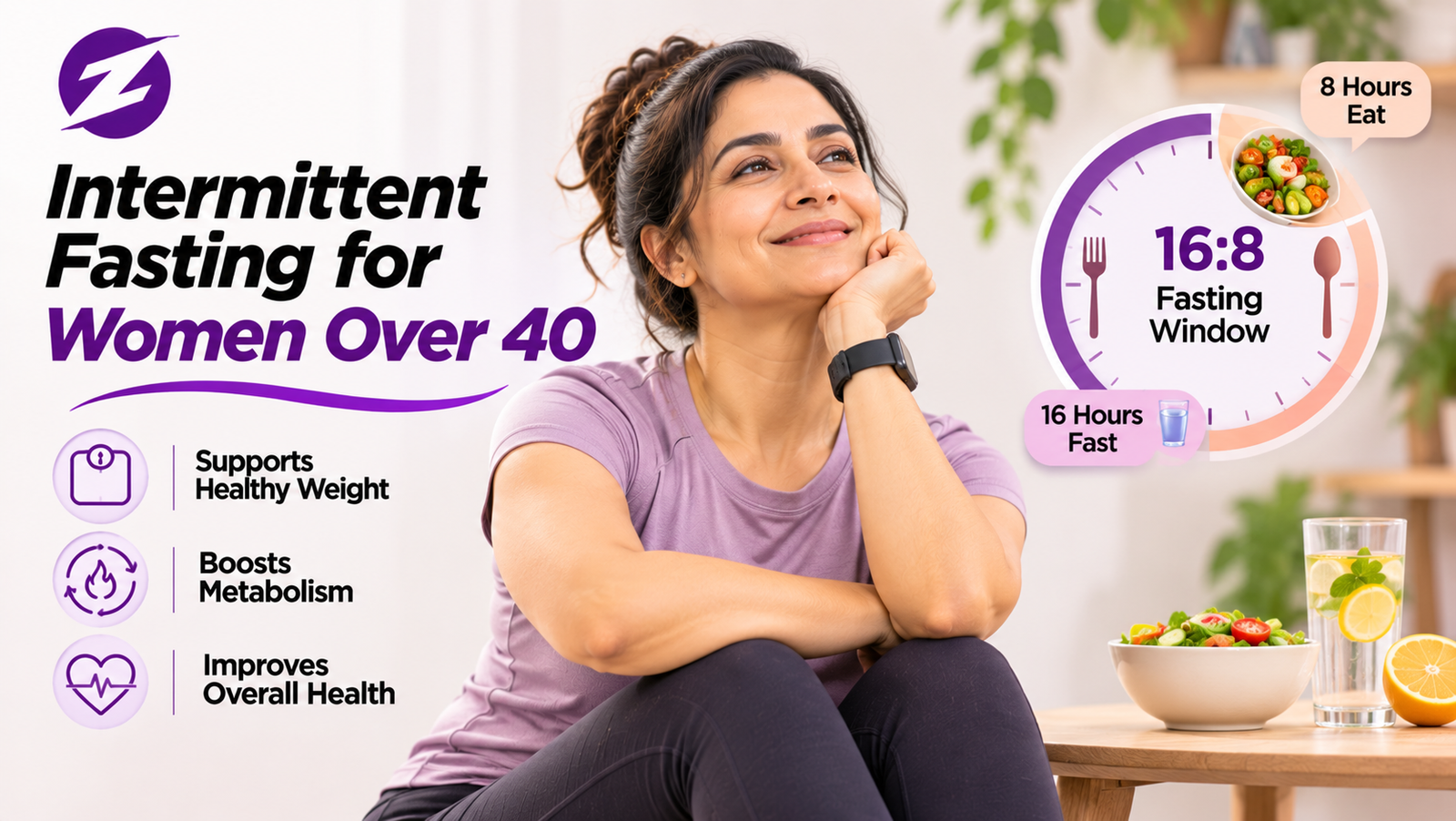
This method involves fasting for 16 hours and eating within an 8-hour window. For example, someone might eat between 10 AM and 6 PM and avoid calorie-containing food and drinks outside that window.
This approach involves a 14-hour fasting period followed by a 10-hour eating window. It is a less restrictive time-restricted eating pattern than 16:8.
This involves 12 hours of fasting and 12 hours of eating. For some people, it may simply mean avoiding late-night snacking and maintaining a regular overnight gap between meals.
This approach involves eating normally on five days of the week and substantially restricting calorie intake on two non-consecutive days. This method can be restrictive and may not be suitable for everyone.
Important: These are descriptions of common fasting patterns, not recommendations that every woman should follow them.
The short answer is: it may help some women manage their eating habits and weight, but it has not been shown to be superior to conventional dietary approaches. Two important research findings help explain this.
A 2026 Cochrane systematic review examined 22 randomised controlled trials involving 1,995 adults with overweight or obesity. Researchers compared intermittent fasting with traditional dietary advice and other approaches.
The findings suggested:
The review did not establish that intermittent fasting is better than conventional dietary advice for weight loss.
It is also important to remember that the participants were adults of different ages and sexes. The findings should not be interpreted as a women-over-40-specific result.
A 2025 systematic review and meta-analysis published in Frontiers in Nutrition examined time-restricted eating in overweight and obese women. It included 13 randomised controlled trials involving 612 participants.
The researchers found that time-restricted eating was associated with modest weight reduction compared with control conditions. However, when compared with conventional calorie-restricted diets, it did not show a clear advantage in weight loss.
The authors also reported that adherence may be favourable for some women, although more long-term research is needed. This review also did not report results specifically for women over 40.
This suggests that time-restricted eating may be one possible approach, rather than a universally better weight-loss strategy. For a broader look at meal timing, read how many meals a day is best for weight loss.
Women may experience several physical and lifestyle changes during their 40s and around menopause. These changes can influence how the body stores fat, maintains muscle, and responds to lifestyle habits.
Perimenopause is the transition period leading up to menopause. Hormonal fluctuations during this stage may be associated with changes in body composition, sleep, and fat distribution.
Some women notice more abdominal fat during this period, although individual experiences vary. See our exercise plan for perimenopause weight gain.
Muscle mass can gradually decline with age, particularly when strength training and adequate nutrition are lacking. Because muscle is important for physical function and metabolic health, maintaining it becomes an important part of a healthy lifestyle.
Sleep difficulties and increased stress can affect appetite, food choices, and daily activity. Improving sleep habits and managing stress may support healthier routines.
Work, family responsibilities, and other commitments can reduce the time available for exercise. A consistent physical activity routine becomes especially valuable when daily movement decreases.
Intermittent fasting does not automatically address these factors. A balanced approach should consider nutrition, exercise, sleep, and overall health. Our guide to diet for women after 30 covers the nutrients that matter most.
Intermittent fasting may offer some practical benefits for certain individuals, although results vary.
Some women find that having defined eating hours makes their daily routine easier to organise. It may also reduce unplanned late-night snacking for people who tend to eat outside regular meal times.
Time-restricted eating can help some people reduce their overall calorie intake. However, the evidence does not establish that fasting itself causes greater weight loss than other sustainable dietary approaches.
Some studies have investigated changes in fasting insulin and other metabolic markers during time-restricted eating. The results are not consistent across all outcomes, and improvements in individual measurements should not be interpreted as proof that fasting prevents or treats metabolic diseases.
Unlike diets requiring detailed calorie tracking, time-restricted eating focuses on an eating schedule. Some women may find this easier to follow, while others may experience excessive hunger or difficulty maintaining the routine.
The best approach depends on individual preferences, nutritional needs, and health conditions.
The 16:8 method is one of the most popular forms of intermittent fasting. It involves fasting for 16 hours and eating during an 8-hour window. However, popularity does not mean it is the best option for every woman.
Some people find an eight-hour eating window manageable, while others experience:
There is also insufficient evidence to recommend 16:8 specifically for women over 40 or as a treatment for perimenopausal weight gain.
If you are considering time-restricted eating, discuss its suitability with a registered dietitian or healthcare professional, especially if you have an existing medical condition.
Want a routine you'll actually stick to?Join our online Zumba classes for women or live online yoga, led by certified instructors, with morning and evening batches.
Book Your TrialPerimenopause and menopause are important stages of women's health. Some women experience changes in sleep, appetite, body composition, and energy levels during these stages.
Although intermittent fasting is sometimes promoted as a solution for menopause-related weight gain, there is not enough evidence to establish it as a specific treatment for menopausal symptoms.
During this stage, focus on habits that support overall health:
The goal should be to maintain muscle, support bone health, and develop sustainable eating habits rather than chasing rapid weight loss. Read more in exercise for menopause symptoms.
Intermittent fasting is not suitable for everyone. Certain health conditions and life stages require particular caution.
Important safety information: If any of the situations below apply to you, do not start fasting without advice from your healthcare professional.
| Person or Condition | Safety Consideration |
|---|---|
| Pregnant women | Avoid intentional fasting unless specifically advised and supervised by a healthcare professional |
| Breastfeeding women | Fasting may affect nutritional and hydration needs |
| History of eating disorders | Restrictive eating patterns may trigger unhealthy behaviours |
| Diabetes medication users | Fasting can increase the risk of low blood sugar with certain medicines |
| Underweight individuals | Fasting may worsen inadequate energy intake |
| People with significant medical conditions | Individual medical assessment is necessary |
Some research has explored time-restricted eating in women with PCOS, but the evidence remains preliminary. Intermittent fasting should not be presented as a proven treatment for PCOS or insulin resistance.
Women with PCOS should discuss dietary changes with their healthcare professional, particularly if they take medication or have irregular eating patterns.
Women taking insulin or certain glucose-lowering medications may experience hypoglycaemia when fasting.
Do not start intermittent fasting or change medication timings without medical guidance.
If a healthcare professional confirms that time-restricted eating is appropriate, food quality remains important. A shorter eating window does not mean you should compromise your nutritional needs.
For women following an Indian diet, balanced meal choices may include:
Protein helps maintain muscle mass and supports normal body functions. Examples include paneer, dal and lentils, Greek yoghurt or curd, eggs, tofu, and chickpeas and beans. See how much protein an Indian woman needs every day.
Fibre supports digestive health and helps make meals satisfying. Examples include seasonal fruits, green vegetables, oats, whole grains, and beans and lentils.
Include appropriate portions of nuts, seeds, peanuts, olive oil, and other unsaturated fat sources.
Drink sufficient water throughout the day. Avoid using dehydration or excessive caffeine to suppress hunger.
You do not need to follow a fasting schedule to manage your weight. Several sustainable habits can support health and fitness.
Strength training helps maintain and build muscle. Women can start with bodyweight exercises such as squats, wall push-ups, glute bridges, and resistance-band rows. Aim for a routine appropriate to your fitness level and recovery. Our strength training plan for women at home is a simple place to begin.
Walking is an accessible form of physical activity. A regular walking routine can support cardiovascular health and help increase daily movement.
Gentle yoga can support flexibility, balance, mobility, and relaxation. It may be a useful addition to a fitness routine, especially when combined with other forms of physical activity. Explore our live online yoga classes for women.
Focus on regular, nutritious meals with sufficient protein, fibre, and healthy fats. You can manage portions without following an extreme fasting schedule.
Maintain a regular sleep routine and create a comfortable environment for rest. Good sleep habits can support appetite regulation and overall well-being.
Intermittent fasting for women over 40 is not a guaranteed solution for weight loss or hormonal changes.
Current research suggests that time-restricted eating may help some women manage their eating habits, but it has not been shown to be consistently better than conventional dietary approaches.
Rather than following restrictive schedules because they are popular, focus on balanced nutrition, strength training, walking, yoga, sleep, and sustainable lifestyle habits. Your health goals should fit your body, your daily routine, and your individual nutritional needs.
At Zyrax Fitness, we believe that fitness is about building strength, improving mobility, and developing healthy habits at every stage of life.
It may be suitable for some women, but evidence does not show that it produces better weight loss than conventional dietary advice. Suitability depends on health, nutritional needs, and personal circumstances.
Age alone does not determine whether fasting is appropriate. Women over 50 should consider their health conditions, medications, nutritional needs, and muscle and bone health before making significant dietary changes.
Some women may tolerate 16:8, but it is not suitable for everyone. Women who are pregnant, breastfeeding, underweight, have a history of eating disorders, or take certain diabetes medications should avoid fasting unless specifically guided by their healthcare professional.
There is currently insufficient evidence to establish intermittent fasting as a specific treatment for menopause-related weight gain. Strength training, balanced nutrition, regular activity, and adequate sleep are important lifestyle considerations.
Fasting may influence metabolic and hormonal markers, but research is still developing. There is not enough evidence to make broad claims that intermittent fasting balances or disrupts hormones in all women.
Not necessarily. The 2026 Cochrane review found little to no meaningful difference in weight loss between intermittent fasting and regular dietary advice. A meal pattern should be chosen according to nutritional needs and sustainability.
Some early research has explored time-restricted eating in women with PCOS, but the evidence is not strong enough to recommend it as a treatment. Discuss dietary changes with your healthcare professional.
Exercise may be possible, but energy availability, hydration, and recovery are important. Avoid pushing through weakness, dizziness, or unusual fatigue. People with diabetes or other medical conditions should seek individual advice.
References: Cochrane Review (2026), Intermittent fasting for adults with overweight or obesity (22 trials, 1,995 participants) · Chen et al. (2025), Time-restricted eating in overweight and obese women, Frontiers in Nutrition (13 RCTs, 612 participants) · 2025 PCOS meta-analysis · 2024 umbrella review of intermittent fasting · Dietitians Australia, Intermittent fasting and safety
Medical Disclaimer: This article is for general educational purposes only and does not replace professional medical or nutritional advice. Intermittent fasting may not be suitable for everyone. Consult a qualified healthcare professional before making significant changes to your eating pattern, particularly if you have diabetes, PCOS, a history of eating disorders, are pregnant or breastfeeding, or take regular medication.
Key Takeaways
Ready To Begin?
Join Zyrax Fitness's live online Zumba and yoga classes and make your fitness journey fun again.
Start Your Journey